Showing posts with label pawn endings. Show all posts
Friday, September 28, 2012
Tuesday, September 18, 2012
King and Pawn vs. King (Chess Homeschool, Day 6)
If we can't play positions with three pieces reasonably well, what hope is there for us with thirty-two pieces on the board?
I'm not providing solutions to any of the positions below yet: get Mom or Grandpa to play the other side and see whether the two of you can figure this out together.
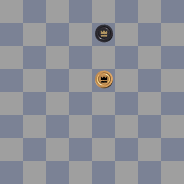
Usually, you want it to be your turn to move. Here, neither player wants to be on move! (Nerd alert: the technical term is reciprocal zugzwang.) When both kings can make it to the pawn's queening square, each player is trying to trick the other into a position like the one above.
In one-on-one basketball, what does the player with the ball do when the defender is in perfect position? Maybe a head fake: the attacker wants the defender to move in one direction so she can drive the lane in the other direction. The pawn's queening square (d8 in Position 4) is like the basket, and the Black king on d7 is a perfectly-placed defender: that's why Black doesn't want to move first! 1...Kc7 2.Ke6 or 1...Ke7 2.Kc6.
To understand Black's drawing technique with White to move, see Vince Hart's blog post, Straight Back Draws. Compare Position 4 to Position 2: Position 2 is always lost because the Black King has no room to go straight back! Of course, it's important to go straight back at the right time: 1.Kc5 Kd8?? loses because White can get to Position 2, but 1.Kc5 Kc7 2.d5 Kd7 and then....
The rook pawn is a special case. Either king can be stalemated on the rook pawn's queening square:
I'm not providing solutions to any of the positions below yet: get Mom or Grandpa to play the other side and see whether the two of you can figure this out together.
![]() |
| 1) White to play draws, Black to play loses |
*******
![]() |
| 2) White wins, no matter whose move it is |
![]() |
| 3) White to play wins, but watch out for stalemate! |
![]() |
| 4) White to play draws, Black to play loses |
In one-on-one basketball, what does the player with the ball do when the defender is in perfect position? Maybe a head fake: the attacker wants the defender to move in one direction so she can drive the lane in the other direction. The pawn's queening square (d8 in Position 4) is like the basket, and the Black king on d7 is a perfectly-placed defender: that's why Black doesn't want to move first! 1...Kc7 2.Ke6 or 1...Ke7 2.Kc6.
To understand Black's drawing technique with White to move, see Vince Hart's blog post, Straight Back Draws. Compare Position 4 to Position 2: Position 2 is always lost because the Black King has no room to go straight back! Of course, it's important to go straight back at the right time: 1.Kc5 Kd8?? loses because White can get to Position 2, but 1.Kc5 Kc7 2.d5 Kd7 and then....
![]() |
| 5) White wins, either player to move |
![]() |
| 6) Rook pawns are weird: draw with either player to move |
![]() |
| 7) Rook pawns are very weird: Black to play draws |
![]() |
| 8) White to play wins, Black to play draws |
![]() |
| 9) A tricky square to draw! |
![]() | |
| 10) White to play wins (in chess, the shortest distance between two squares is not necessarily a straight line!) |
![]() | |
| 11) Black to play draws (Gligoric-Fischer, Candidates 1959) |
![]() |
| 12) White to play: what happens? Black to play: ditto? |
There's much more to know: the Wikipedia article on king and pawn vs. king is a good place to continue. (Check out the 1908 study by Jan Drtina in the "Any key square by any route" section.) If you enjoy these endings, I can't recommend Müller & Lamprecht's Secrets of Pawn Endings strongly enough: it's amazing that these seemingly simple positions are so complicated and so beautiful.
Experienced players will note that I avoided the "O word"! I like to teach that by starting with a position from checkers:
![]() |
| Black to play loses; White to play draws |
Tuesday, September 4, 2012
A bizarre ending
One of those games that demonstrates why Grandmasters are Grandmasters. I think there was a double blunder on move 44, but please don't trust this analysis. (If you're looking at this with a computer, please keep the horizon effect in mind: the engine's initial evaluation of the pawn ending may be wildly inaccurate.)
Friday, July 27, 2012
Chicago Class: Class D recap
Congratulations to two Illinois players, David Sye and Terrence Aguinaldo, who tied for first in Class D with 4½-½ scores. (Sye's prize was limited to $500 because he had recently had a rating more than thirty points over the class ceiling; Aguinaldo won a full $1,000.) Another local player, Ga Luang Liu, shared third place with Hongbin Chen of Michigan and Sean Cramer of Ohio: each won $166.67.
(David titles his post "A complicated endgame position from the Chicago Class," but really, the position is easy if you've taken the time to learn some basic tricks--and there are several cute finesses in this simple-looking position. There might even be lines that David correctly doesn't mention because they're not Black's best try, but are still worth looking at....)
Class D crosstable is here!
Monday, May 14, 2012
Use your fingers and toes
Nik Goncharoff of the Motorola Kings has played 612 (!!) games in the Industrial League. So it's not surprising that he knows how to count reserve tempi. Create zugzwang in a pawn ending, and the player who has more pawn moves in reserve will usually win:
Friday, January 6, 2012
Five studies by Richard Réti
The following study by the great Richard Réti shares a key theme with Wednesday's study by Frederick Rhine. Give it a whirl!
Réti
Teplitz Schönauer Anzeiger, 1922
White to play and win
Here's one of Réti's greatest hits:
Réti
Hastings and St. Leonards Post, 1922
White to play and win
In the rook versus pawn(s) battle, the defender can use a similar theme:
Réti
Shakhmatny Listok, 1929
White to play and draw
Réti's most famous study often appears in beginner's books (but it's far from simple!):
Réti
Deutsch Österreichische Tageszeitung, 1921
White to play and draw
Réti composed a variation on this theme that deserves to be better known:
Réti
Deutsch Österreichische Tageszeitung, 1921
White to play and draw
You'll find more Réti studies at this cool website and on the highly recommended HHdbIV.
Thursday, January 5, 2012
The most famous study with a Chicago connection?
Emanuel Lasker & Gustavus Reichhelm
Chicago Tribune, 1901
White to play and win
This is probably the second-most famous study with a World Champion as (co-)composer (Lasker's famous 1890 rook ending gets top honors). Solution here: block an hour out of your schedule and allow yourself to be mystified. (But try it yourself first: if the White king makes it to b5, Black has no defense. And if the White king makes it to g5, Black has no defense.)
HHdvIV gives the source as "Literary Digest 1901," but according to one Wikipedia editor, this version (with kings on a1 and a7) was first published in the Trib.
Does this study have something to say about the postmodern condition? (Two fools wandering aimlessly in a barren landscape?) Marcel Duchamp co-authored a book with the endgame composer Halberstadt that was inspired by this study, L'Opposition et les cases conjugées sont réconciliées (not to be confused with the 1980s electronic music album of the same name by the French band Etant Donnés!). Andrew Hugill has persuasively suggested that the theory of coordinate squares influenced Samuel Beckett's Endgame. (Beckett, a chess player, knew Duchamp.)
And please: Vladimir Nabokov composed problems, not studies.
And have I indulged in enough pointless blather for one morning?
Wednesday, December 21, 2011
Another great chess app for iPad / iPhone
e+Chess is a chess book reader that comes with one free title, Capablanca's Chess Fundamentals. (This is the same book I started to excerpt on this blog and will get around to finishing someday: it's out of copyright.) As you might imagine, displaying both the text of a chess book and an interactive chess board is a bit much on an iPhone, but it's legible in landscape mode.
Here's a screen capture from my iPhone: I touch "1.f5" on the left side (the text of the book), and the move is made on the board. And I can shuffle the pieces investigating my own variations (as long as the moves are legal). Cool.
Here's a screen capture from my iPad: as you can see, there's a lot more room on the larger screen.
Silman's Complete Endgame Course is available in this format for $17.99. You're much more likely to study the iPad version than the paperback! But unless you absolutely love your iPhone, I wouldn't buy the book to read on the tiny platform: just too darn small. But that's not the fault of this great app. There are even nuggets of Silman's wisdom sprinkled through the text as audio files. To be clear, e+Chess falls far short of the true multimedia available through ChessBase, but this is a promising start.
There's also a Valeri Beim book on middlegame strategy available in this format (Beim is one of my favorite authors, but I'm not familiar with this book), and a few oddball titles. It remains to be seen how popular this format becomes (e+Chess could go the way of Betamax). And the serious player is more likely to get more utility from ChessBase or PGN formats. But ease of consumption is a strong counterargument: the platform looks very promising to me!
If you own an iPad and you want to join Vince Hart in studying Silman's Complete Endgame Course (an excellent book for anyone from complete beginning to aspiring master), you can't go wrong downloading e+Chess. If you own an iPhone, download it anyway, if only to read a free interactive copy of Chess Fundamentals, one of the greatest chess books ever written. But I wouldn't spend money on content unless you're buying for the iPad.
Here's a screen capture from my iPhone: I touch "1.f5" on the left side (the text of the book), and the move is made on the board. And I can shuffle the pieces investigating my own variations (as long as the moves are legal). Cool.
Here's a screen capture from my iPad: as you can see, there's a lot more room on the larger screen.
Silman's Complete Endgame Course is available in this format for $17.99. You're much more likely to study the iPad version than the paperback! But unless you absolutely love your iPhone, I wouldn't buy the book to read on the tiny platform: just too darn small. But that's not the fault of this great app. There are even nuggets of Silman's wisdom sprinkled through the text as audio files. To be clear, e+Chess falls far short of the true multimedia available through ChessBase, but this is a promising start.
There's also a Valeri Beim book on middlegame strategy available in this format (Beim is one of my favorite authors, but I'm not familiar with this book), and a few oddball titles. It remains to be seen how popular this format becomes (e+Chess could go the way of Betamax). And the serious player is more likely to get more utility from ChessBase or PGN formats. But ease of consumption is a strong counterargument: the platform looks very promising to me!
If you own an iPad and you want to join Vince Hart in studying Silman's Complete Endgame Course (an excellent book for anyone from complete beginning to aspiring master), you can't go wrong downloading e+Chess. If you own an iPhone, download it anyway, if only to read a free interactive copy of Chess Fundamentals, one of the greatest chess books ever written. But I wouldn't spend money on content unless you're buying for the iPad.
White to play
As long as we're on this page, here's a famous passage. Capa writes, "In the above position White can't win by 1.f5. Black's best answer would be 1...g6, draws. (The student should work this out.)" Your thoughts, students?
Tuesday, November 1, 2011
A great deal of endgame wisdom condensed into one position
Jeff Coakley's Winning Chess Exercises For Kids delivers a healthy dose of endgame wisdom along with the tactical exercises.
In the general case, are rook endings easy to win?
White to play and win
In the general case, are rook endings easy to win?
Wednesday, September 28, 2011
Chicago Industrial Chess League season underway
As always, check out the latest results at the fabulous CICL site. I play for the AMA Rogue Squadron in the East Division: we won a tough match on Monday against Blue Cross / Blue Shield 4-2. Our teammate Jim Duffy lost a very interesting game to Sonny Mata, and it took me a long time to figure out the computer evaluations in this very interesting ending. Please take the following notes with a large grain of salt: I'm still not sure I understand what was going on, and computers are not to be trusted in rook endings!
After 40.Kc2
Black to play: how to stop the e-pawn?
Analysis diagram
White to play and win: harder than it looks!
Monday, September 5, 2011
Torture from Grigoriev
64, 1936
White to play and win
Some positions in this study could have arisen in my game with Mack Smith. The solution is not easy!
Saturday, September 3, 2011
A "simple" pawn ending
Position after 45.Ka3: does conversion to a pure pawn ending with 45...Rxb5 draw?
In the last round of the CICL summer league tournament graciously hosted by the gurus of capital at Citadel Group, Mack Smith and I played a fun game with several interesting points. Learn from my mistakes!
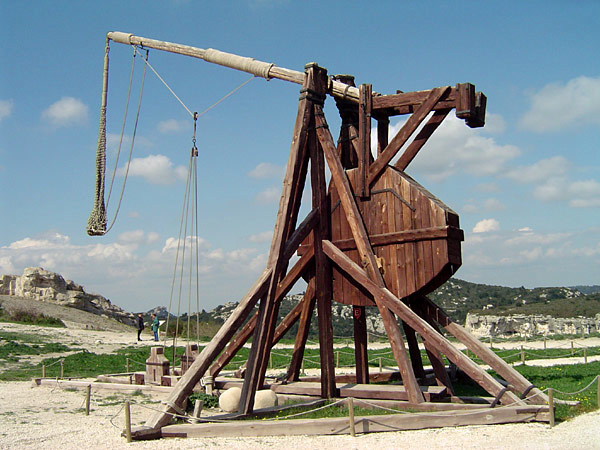
Beginners may wish to play around with the trébuchet position first to better understand what's going on in the pawn ending. You'll find a brief explanation in the Wikipedia article on zugzwang.
Thursday, February 24, 2011
Beginners' trap?
Local Class A player Dean Arond plays many objectively dubious openings. But he knows them very well, he has fun playing these sharp lines, and more than one master has fallen into his snare. In the following game, Dean equalizes against Whitney Young's Sam Schmakel with an opening best known as a beginners' trap.
White to play
Sam Schmakel-Dean Arond, Skokie 2011
I thought the ending was interesting, too! You can play through the game on the interactive board below:
Sunday, June 13, 2010
Cute!
Matt Pullin explains a very nice pawn endgame study. I guessed the first two moves immediately, but it took me awhile to fathom the point.
Tuesday, December 22, 2009
I suppose I should have given the answer for the trébuchet problem...
As usual, you can find the answer in Wikipedia. (Slightly different position, but the idea is exactly the same.)
And to make sure we all understand, here's yet another a slightly different position that you won't find at the Wikipedia link. What is White's best move?
White to play and win
Monday, December 21, 2009
Grigoriev's amazing pawn endings (1)
I did not know until I peeked in Wikipedia that Nikolai Grigoriev won the Moscow championship four times. He's best remembered today as a composer of endgame studies: pawn endings were his specialty.
(After my last tournament outing, I feel that I need a refresher course in pawn endings: maybe you can help me!)
Grigoriev
Shakmatny listok, 1931
White to play and draw
Every pawn ending starts as something other than a pawn ending: it's fairly obvious that White is going to have to give up the rook for Black's b-pawn. But how? And how does White draw the pawn ending?
Our new friend the trébuchet may make an appearance in one of the variations.
Solutions in a few hours!
Friday, December 18, 2009
Sunday, December 13, 2009
Pawn endings are hard (part 2)
White to move
Bill Brock - Andrew Taylor, MCA FIDE, 6 Dec. 2009
Please consider the following notes provisional: I'm still not quite sure what's going on in this ending.
Every pawn ending starts as something else: in this case, a bishop ending. In the diagrammed position, I thought I was slightly better despite the doubled f-pawns because the e5 pawn restricts the Black bishop's scope. I should have been more worried about my kingside pawn structure. My f2 pawn is on a dark square and part of a doubleton.
27. Kb4?!
27. Be3 is equal
27... Bf8+ 28. Ka5
Is this king penetrating towards victory? Or is it hopelessly offsides?
28. Bc5 29. Be3

After 29.Be3: Black to move
29...Bd4!
The pawn ending is not yet winning. 29... Bxe3 30. fxe3 g5 31.
Ka6?? h5 32. Kxa7 f5! 33. exf5 e4 34. fxe4 g4 35. f6 Kd7 is an easy win for Black. But 31.Kb4! holds the draw.
30. Ka6??
I should have sacrificed a pawn to stay in the bishop ending with 30. Bg5!?
30... f5?
Black breaks through with 30... Bxe3!! 31. fxe3 g5 32. b4 h5 33. Kxa7
Analysis position: Black to move after 33. Kxa7
33...f5! is a beautiful breakthrough combination: if White takes the f pawn, then 34...e4! deflects the f3 pawn, after which the g5 pawn runs free.
31. exf5 gxf5
After 31...gxf5: White to move
32. f4!
And somehow it's a draw again....
31... Bxe3 33. fxe3 exf4 34. exf4 b4!
I completely overlooked this strong and natural move (the b4 pawn paralyzes both a2 and b3).
White to move:
there is nothing in the Rules of Chess that expressly prohibits counting on one's fingers
35. Ka5??
The only move is 35. Kxa7!: I simply did not believe that this move could possibly draw (it seems so time-consuming to grab a7, then run back to grab b4), but the a2 pawn runs quickly, and the Black king has to make a clearance move for the f5 pawn. 35... Kd5 36. Kb6 Ke4 37. Kc5 Kxf4 38. Kxb4 Kg3 39. a4 f4 40. a5 f3 41. a6 f2 42. a7 f1=Q 43. a8=Q
Analysis position: Black to play (looks like a draw)
Back to the game
35... Kc5 36. Ka4 h5 37. h4 Kd4 38. Kxb4 Ke4 39. Kc3 Kxf4 40. Kd2 Kf3! 41. b4 f4 0-1
Thursday, December 10, 2009
Pawn endings are hard (part 1)
I managed to fish out a win from a totally drawn position, but both of us missed a lot of subtleties in this innocuously vanilla position.
Subscribe to:
Posts (Atom)