Showing posts with label chess homeschool. Show all posts

Monday, October 1, 2012

"Teacher overslept!" answers, part 1


I'm glad the strike ended relatively quickly: otherwise, I'd have been posting delinquent answers well into 2013.  These examples were lifted from Irving Chernev and ChessBase 2012.

Experienced players often resign against masters when they've lost a minor piece.  Beginners should keep playing until they understand why the position is hopelessly lost.

11) White to play


12) Black to play


13) White to play


14) White to play


15) Black to play


16) White to play


17) Black to play


Sometimes good counting skills are more important than brilliance:


Tuesday, September 18, 2012

King and Pawn vs. King (Chess Homeschool, Day 6)

If we can't play positions with three pieces reasonably well, what hope is there for us with thirty-two pieces on the board?

I'm not providing solutions to any of the positions below yet: get Mom or Grandpa to play the other side and see whether the two of you can figure this out together.

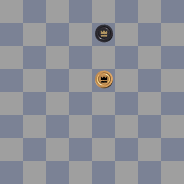
1) White to play draws, Black to play loses
Usually, you want it to be your turn to move. Here, neither player wants to be on move! (Nerd alert: the technical term is reciprocal zugzwang.) When both kings can make it to the pawn's queening square, each player is trying to trick the other into a position like the one above.

*******

2) White wins, no matter whose move it is
3) White to play wins, but watch out for stalemate!
4) White to play draws, Black to play loses

In one-on-one basketball, what does the player with the ball do when the defender is in perfect position?  Maybe a head fake: the attacker wants the defender to move in one direction so she can drive the lane in the other direction.  The pawn's queening square (d8 in Position 4) is like the basket, and the Black king on d7 is a perfectly-placed defender: that's why Black doesn't want to move first! 1...Kc7 2.Ke6 or 1...Ke7 2.Kc6.

To understand Black's drawing technique with White to move, see Vince Hart's blog post, Straight Back Draws.  Compare Position 4 to Position 2: Position 2 is always lost because the Black King has no room to go straight back! Of course, it's important to go straight back at the right time: 1.Kc5 Kd8?? loses because White can get to Position 2, but 1.Kc5 Kc7 2.d5 Kd7 and then....

5) White wins, either player to move
The rook pawn is a special case. Either king can be stalemated on the rook pawn's queening square:

6) Rook pawns are weird: draw with either player to move


7) Rook pawns are very weird: Black to play draws
What happens when the kings are far away from the pawn? It's good to know the square of the pawn rule  (much easier than "I go here, he goes there, I go here.." or counting on your fingers):

8) White to play wins, Black to play draws
9) A tricky square to draw!
Kings have elbows and should learn how to use them:

10) White to play wins (in chess, the shortest distance between two squares is not necessarily a straight line!)
11) Black to play draws (Gligoric-Fischer, Candidates 1959)
12) White to play: what happens?  Black to play: ditto?
If you find the answer to Position 12 intuitive, you're a better player than I am!  (Can White create Position 1 with Black to move?)

There's much more to know: the Wikipedia article on king and pawn vs. king is a good place to continue. (Check out the 1908 study by Jan Drtina in the "Any key square by any route" section.)  If you enjoy these endings, I can't recommend Müller & Lamprecht's Secrets of Pawn Endings strongly enough: it's amazing that these seemingly simple positions are so complicated and so beautiful.

Experienced players will note that I avoided the "O word"!  I like to teach that by starting with a position from checkers:

Black to play loses; White to play draws

Monday, September 17, 2012

Queen vs. Pawn (Chess Homeschool, Day 5)

You already know how to mate with king and rook against king or king and queen against king. King and pawn against king is surprisingly complicated: we'll do that tomorrow. For now, let's look at major battles between king and piece vs. king and pawn.  We'll start with queen vs. pawn.

1) White to play and win
In Diagram 1 above, Black is about to make a queen, and king + queen vs. king + queen is usually a dead draw.  (We'll see some exceptions shortly!)  So White must stop the pawn from queening.

When the pawn on the seventh is a knight pawn or a center pawn, the win is easy.  Use queen checks to approach the pawn in a zigzag fashion. If the king steps away from the pawn, you can attack the pawn along the file, preventing it from queening, and make the king come back. Eventually, you'll force the Black king to step in front of the pawn on b1. Bring your king one step closer. Lather, rinse, repeat! It may take twenty moves or so, but White eventually win the pawn with king and queen and checkmate.

2) White to play: Black draws
The above technique works great with center pawns and knight pawns, but it breaks down with rook pawns. In Diagram 2, the White queen will eventually make it to (say) g4, giving check to the Black king on g2. Black will play ...Kh1! White doesn't have time to bring her king up, as the stalemate must be released. So it's a draw with best play.

3) White to play: Black draws
Diagram 3 is a draw, too. Imagine that White zigzags to (say) g3, giving check to a Black king on g1. Black sacrifices the pawn with ...Kh1! and White can't make progress: the reply Qxf2 is stalemate. Get out the pieces and try this yourself!

4) White to play and win
Diagram 4 (taken from Müller and Lamprecht's Fundamental Chess Endings, position 9.03) is a very cool exception: if the king is close enough, you might be able to find a way to let Black make a queen, then catch Black in a mating net! (Visualize the position: White Kb3, Qd2, Black Kb1, Qa1: even if it's Black's move, is there any way for Black to escape this predicament?)

5) White to play and win
In Diagram 5, White can again allow Black to queen, then deliver mate on the c2 square.


6) Angelo Young - Awonder Liang, Skokie 2012: White to play and win

As a general rule, the queen wins easily against a pawn on the sixth rank. Just last night, I saw IM Angelo Young beat Awonder Liang at the North Shore Chess Center (Diagram 6). Angelo began with 1.Qg2+, then zigzagged closer until he gave check on the b4 square. Awonder resigned, as his only move to protect the a3 pawn was ...Kb2-a2. White then moves the king anywhere, and it's Black turn. Unfortunately, there's no such thing as semi-stalemate: Black's only move is ...Ka2-a1, and White grabs the free pawn with check.  

There is no substitute for trying to work these positions out for yourself: that's the way you'll remember them! Answers later: let us know if you get stuck.

Silman's Complete Endgame Course is a great reference for young players.  It's available as an interactive app for the iPad.

Saturday, September 15, 2012

Answers to Day 2 Problems (Chess Homeschool)

Queens died prematurely in all of these miniatures.

This game was in Guinness for being the shortest game between two masters. 4.h3?? weakens White's defenses along the e1-h4 diagonal, and Black forces White to choose between loss of king or loss of queen:


Black was very brave to accept the Danish Gambit without the customary "return of gift" (3...d5!? or 5...d5!?).  But 6...Bg4? lost a pawn to the standard 7.Bxf7+! trick, and 9...Nf6?? allowed a skewer:


The next one isn't easy: the loser of this game, GM Ratmir Kholmov, once beat Bobby Fischer brilliantly. The in-between move 11...Bxg2! takes a flight square away from White's king so that 12...Bb4+ can only be answered by 13.Qd2. And if White makes a normal move (12.Qd2 or 12.Nc5), Black just takes the free rook.


Black relied on the absolute pin in the game below when he played 11...Rd8?? But after 12.Qxd8+! Kxd8 13.O-O-O+, White unpins with check and wins back the queen with interest.


I apologize for the unfairness of the next problem! (But you did have the big hint that a queen hunt was involved...) The big pitfall to avoid was 12.Bxe7?? Nf3+! winning White's queen. But after 12.Be2!, White really is threatening 13.Bxe7, as well as 13.Bh5 trapping the Black queen, and there's no way for Black to stop both threats.


Accidents happen when the queen doesn't have Luft (chess players use the German word for "air" to mean an escape square or airhole). After 5.Bxf7! Kxf7 loses the queen after 6.Ng5+ Ke8 7.Ne6 or 6...Kf8 7.Ne6+, and 6...Kf6 7.Qf3 is mate. Patzers like you and me might choose to play on after 5...Kf8, but after 6.Ng5, White is up a pawn with a winning attack.


Whenever the queen and king are lined up on the e-file, look for tactics! 9.Qxe5+?? opened the e-file, and Black immediately took advantage with 9...Kd7!, clearing the way for the Ra8 to come to e8. The bishop on c1 was already hanging, and White has no way to answer both threats (10.Qc3 Re8+ and mate in one move).


If you've lost material out of the opening, and you're playing in London in 1940, you should keep calm, carry on, and trap the opponent's queen. Booth played 12.c3!, and Black has no way to escape, nor to stop 13.Nb3. Give yourself full credit if you chose 12.O-O! instead: 12...Qxd4 loses to the discovered attack 13.Bb5+, and 12...Bd7 13.Qb4 is overwhelming for White (or so Houdini tells me).


It is good to threaten mate and the queen at the same time! 12.Nd5! is a killer because 12...Qxd2 is answered by 13.Nc7 checkmate, and 12...Rxd5 13.Qxa5 wins because the poor knight on c6 doesn't really protect a5: it's pinned. The winner of this game, former U.S. Champion GM Arnold Denker, donated the money to fund the annual Denker Tournament of High School Champions.


You've already seen the Bxf7+! followed by Ng5+ & Ne6 queen suffocation idea. The only difference in this game is that Black could have responded to 7.Bxf7! Kxf7 8.Ng5+ with 8...Kg8. While the queen is not lost, checkmate on f7 is Black's fate after 9.Qb3+

Friday, September 14, 2012

About yesterday's independent study.... (Day 3 followup)

Can everyone here mate with king and rook against king? This interactive lesson at chesskids.com teaches you the basic concept of restricting the king to a smaller and smaller space (think of Han Solo in the trash compactor, with the walls moving in).  No, the method taught in this lesson isn't the fastest, but it's easy for young people to understand.

But don't overdo it! Completely suffocating the enemy king is not necessarily a good thing.

White to play: find two really bad moves for White
Now imagine that White decides to play 1.Kc7 and Black responds 1...Ka7. I showed this position to a group of elementary school students and they were stumped. So I asked their parents to help, and THEY were stumped, too!

You should be able to checkmate in two moves from the above position.
White to play: checkmate in two moves if you can!
Questions:

1. Pretend it's Black's move. What would Black play? And what would White's best answer be?

2. But it's really White's move. How can White make progress by wasting time? (You should be able to checkmate Black in two moves.)

The rook is an amazingly powerful piece, but without the weapon of zugzwang (making the opponent move when she doesn't want to), it's impossible for king and rook to mate a lone king.

Some time ago, we blogged Capablanca's explanation of how to mate with king and queen against king.  Again, be careful not to stalemate the bare king!

White to play: is 1.Qc7 a good idea?
You should be able to checkmate Black in two moves.
White to play
How many moves does White have that give away the win? (If you can find all the bad moves, you'll be less likely to make them in your next game.)

And can you checkmate Black in three moves from this position?

Teacher Overslept! (Chess Homeschool, Day 4)

No particular theme today. Number 22 is relatively difficult.
11) White to play

12) Black to play

13) White to play

14) White to play

15) Black to play

16) White to play

17) Black to play

18) White to play

19) Black to play

20) White to play

21) White to play

22) White to play

23) Black to play

24) White to play

Thursday, September 13, 2012

Endgame Practice (Chess Homeschool, Day 3)

Here's something to keep you kids occupied while the CPS teachers strike continues. And adults too!

chessvideos.tv offers you the opportunity to hone your endgame skills, playing against the Crafty engine on a wide variety of positions, ranging from elementary (king and queen versus king) to very difficult (king and queen against king and rook, an ending that even grandmasters have failed to win within 50 moves). Click here and get to work!

 Got to go now - must make sure I can mate with bishop and knight against lone king within 50 moves. Don't want to embarrass myself like GM Epishin! They also have an instructional video on that one.

P.S. It seems that I have mad skillz (that's what the kids, er kidz, say nowadays, isn't it?) with bishop and knight. I mated in 31 moves! Queen against rook, alas, would surely be a different story.

Wednesday, September 12, 2012

Let Them Eat Queens (Chess Homeschool, Day 2)

Another day of prep: whew!  So teachers do this 180 days per year?

Winning the queen doesn't guarantee winning the game, but it certainly helps.  So before you turn on Cartoon Network, try the following quiz: answers tomorrow.  I believe that all of these games finished in 12 moves or less.  Some of you will probably recognize the famous position in the first game.

1) Black to play and win
2) White to play and win
3) Black to play and win

4) White to play and win
5) White to play and win
6) White to play and win
7) Black to play and win

8) White to play and win

9) White to play and win

10) White to play and win