Friday, February 8, 2013
A positional draw
It is theoretically possible for a lone bishop, in certain very rare situations, to draw against two rooks. The bishop must be pinning one of the rooks against the enemy king, the bishop must have at least one additional square available to it on the pinning diagonal, the defender's king must also be attacking the rook, and the attacker's other rook and king must be tied up defending the rook. The "free" rook must be placed in such a way that it cannot check the defending king or pin the defending bishop. See diagram below.
Problemists have long known of this type of drawing position. It is also mentioned in some practical books, for example Ludek Pachman's Attack and Defence in Modern Chess Tactics. In actual practice, it is an extremely rare bird. Mega Database 2013 has about 5.5 million games. The position after Black's 75th move is the only example of this positional draw.
I remember being amazed when I first encountered this idea almost 40 years ago, in a comment by Manfred Zitzman in Robertson Sillars' "Reader's Showcase" column in Chess Life & Review (the magazine known today as simply Chess Life). (As I recall, Zitzman and his opponent might have reached such a position in their game, but didn't actually do so. Zitzman proposed calling this type of situation "the Zitzman theme," until readers pointed out that problemists had conceived this idea long before.)
Despite White's huge material advantage, he cannot make progress. If he waits with Rb5/c5/d5/e5, Black does the same by shuffling his bishop from h7 to g6 and back again. White's only winning try is to give up his rook and try to win the resultant rook versus bishop ending (a book draw). Adams realized this and immediately gave up his rook, but it was still a draw.
Incidentally, this sort of positional draw is one of the few instances where we humans can feel superior to chess engines. If one shows this position to Houdini 3 (for example), it is utterly unimpressed. It gives White a +6.17 advantage - a trivial win! Asked how it proposes to win, it produces 76.Rc5 Bg6 77.Rd5 Bh7 78.Re5 Bg6 79.Rc5, and keeps going that way until it's on the brink of a three-time repetition. Then it finally gives up the rook and changes its evaluation to +0.32 (small advantage to White).


Wednesday, February 6, 2013
The Art of Positional Play
Not really. I was in a bad mood because I had failed in my previous game, a Smith-Morra, in my attempt to "be like Marc." A positional player would have played 5...Nf6 (instead of my 5...e4!?) and 10...Bc5 11.Bd3 Qe7 (instead of my 10...g5?!). In either case, says Houdini, I would have had the advantage, whereas my "cowabunga" play could have enabled White to equalize. But hey, it worked!
Tuesday, February 5, 2013
Bishop and knight versus rook and pawn
Every beginner learns that a bishop or knight is worth three pawns, while a rook is worth five. It follows that a bishop and knight are worth six pawns, as is a rook and pawn, so exchanging bishop and knight for rook and pawn is an even exchange. In practice, however, it is rarely so simple.
Often a player has the opportunity to make such an exchange in the opening by giving up a bishop and knight for rook and pawn on the f7 or f2 square. This is rarely a good idea: the opponent's bishop and knight can get very active before the "extra" rook has a chance to get into play.
These themes are illustrated by the following game, where my minor pieces and queen whipped up a winning attack while my opponent's rook sat, unmoved, on a1. In the final position my opponent flagged while futilely searching for a defense against my dual threats of 24...Qxh2# and 24...Nxf2+ 25.Kg1 Qxg2#.
Sunday, February 3, 2013
Bowling 'em over
In the context of chess, when we say "sack," we're usually referring to a sacrifice play. In football, it means to catch a player off-guard and knock him down. The latter is what Eric Paniagua, third-seeded in the Super Bowl quad in the eponymous tournament at UNAM, did to his opponents on Feb. 2.
Paniagua (1807) scored an upset victory over Expert Honorius Constantin (2045) and drew Bill Smythe (1873), finishing with a final score of 2.5/3.
For his final trick, Paniagua exploited a badly timed castling to tear open Paul Garner's position and score his second win of the day.
Vito Vitkauskas swept the Rose Bowl quad, 3.0/3. The Fish Bowl was won by Armando Rodriguez, a new USCF member whose only recent tournament activity was the unrated Chicago Latino Championship in November. Rodriguez finished with 2.5/3, pulling ahead of Armel Peel and Michael Monsen with a last-round win (Peel lost in round 3, and Monsen drew).
Complete crosstables here.
Paniagua (1807) scored an upset victory over Expert Honorius Constantin (2045) and drew Bill Smythe (1873), finishing with a final score of 2.5/3.
For his final trick, Paniagua exploited a badly timed castling to tear open Paul Garner's position and score his second win of the day.
Vito Vitkauskas swept the Rose Bowl quad, 3.0/3. The Fish Bowl was won by Armando Rodriguez, a new USCF member whose only recent tournament activity was the unrated Chicago Latino Championship in November. Rodriguez finished with 2.5/3, pulling ahead of Armel Peel and Michael Monsen with a last-round win (Peel lost in round 3, and Monsen drew).
Complete crosstables here.
Friday, February 1, 2013
Knight forks tutorial
Since we're on the subject of forks, here's an amusing game. White's play was execrable, but the game features two knight forks, one in a variation, the other in the game continuation. White played a sort of demented Kopec System against my Sicilian. Houdini 3 doesn't like my 5...Ne5, winning the bishop pair but exchanging off my opponent's bad bishop, preferring 5..Nf6 with a small advantage. White should have responded to my 6...Bh6!? (see diagram) with 7.Qe2, when the position is about equal. After his 7.Qg3??, I already had a winning advantage! Do you see how?
After 7...Bf4! the bishop was immune since 8.Qxf4? Nxd3+ would fork White's king and queen. So 8.Qh3 was forced, when 8...d5! discovered an attack on White's queen. Now the only way to save White's bishop would have been the abject 9.g4 Bxg4 10.Qf1. He missed this, playing 9.Qh4??, when 9...Nxd3+ won a piece and left White's queen in mortal danger. He fell into a knight fork with 10.Kd1? g5! 11.Qh5 Bg4+! 12.Qxg4 Nxf2+, and resigned.
Thursday, January 31, 2013
Not a random shot
Albert Chow was already a strong player in 1979 (he won the Class B prize at the U.S. Open), but he was not yet a match for Erik Karklins. Chow counts on the "fork trick" 6.Nxe5 followed by 7.d4 to regain his piece, but Black has a different fork trick in mind.
Hat tip to Frederick Rhine.
Hat tip to Frederick Rhine.
"Meet the Champs"
As Nicholas Kristof goes on sabbatical, he leaves us with thoughts about Elizabeth Vicary Spiegel and I.S. 318 .
O brave new world
The Illinois Chess Association will soon be retiring its too-easily-hacked online forum.
Its replacement? A Facebook page, of course. Thanks again to Tom Sprandel!
Reeling in the big fish
Many have tried; few have succeeded.
Our own Carl Boor took down former U.S. Champion Alexander Shabalov last weekend:
Our own Carl Boor took down former U.S. Champion Alexander Shabalov last weekend:
Tuesday, January 29, 2013
Swiped from Carl Boor
...as originally posted on the Chicago Area Chess Facebook page:
Nine-year-old David Peng also played and lost a few rating points: he's still comfortably higher rated than your 55-year-old blogger.
Crosstable here!
Chicago Masters Dmitry Gurevich, Carl Boor, Gopal Menon, and Zach Kasiurak played this past weekend at the Cardinal Open in Columbus Ohio. Gurevich and Boor shared 2-3rd place behind Brazilian champion GM Andre Diamant. The tournament was excellently conducted with generous prizes and a higher attendance than projected. In addition to GM Gurevich and Diamont former US champions Alex Yermolinsky and Alexander Shabalov (upset by Boor in the final round) competed.Menon lost only to GM Gurevich (he nicked GM Shabalov for a draw), and Kasiurak lost only to Shabalov. The local competition is getting rather intimidating....
Nine-year-old David Peng also played and lost a few rating points: he's still comfortably higher rated than your 55-year-old blogger.
Crosstable here!
Illinois Chess Association affiliate upcoming events
Hot off the e-mail press, courtesy of ICA Secretary (and Immediate Past President) Tom Sprandel.
This Saturday in particular looks like a great day for players and students at all levels. The North Shore Chess Center is hosting GM Robert Hungaski for a lecture and simul (great for adults and advanced students), William Aramil and Carl Boor are teaching in Oak Park (great for all young players), and UNAM Chicago in conjunction with the Chicago Chess Center is hosting Super Bowl quads with a $10 entry fee (such a deal).
Whether it's sixty degrees or six below, play chess this weekend!
Highlights later this month include the U.S. Amateur Team in Schaumburg on Feb. 15-17 and the Illinois Blitz Championship on Saturday the 16th at the same site. Travelers should mark their calendars the K-8 Championship in Bloomington and the Greater Peoria Open (an Illinois Tour event).
For more events, see the ICA Tournament Calendar.
Affiliate Events
"The Grandmaster in the Corner Office"

Between tax season and a couple chess projects I'm working on, I might not be blogging too much in the next few days.
In the course of researching one of the chess projects, I came across this blog entry on deliberate practice (a buzzword among business gurus and chess trainers). How do experts become expert at the thing they do? And why aren't we experts? I think I've previously recommended Malcolm Gladwell's Outliers as a fun read.
For the pedantic, K. Anders Ericsson's famous paper is available here (hosted on the Freakonomics blog).
Back to work!
Saturday, January 26, 2013
Top 500 players in Illinois
Not on the list? Play in a tournament and show us you belong!
| Rank | Name | Rating |
| 1 | GM YURY SHULMAN | 2632 |
| 2 | GM NIKOLA MITKOV | 2577 |
| 3 | GM DMITRY GUREVICH | 2576 |
| 4 | GM VLADIMIR GEORGIEV | 2568 |
| 5 | GM MESGEN AMANOV | 2556 |
| 6 | ANGEL YOSIFOV ANGELOV | 2491 |
| 7 | IM FLORIN FELECAN | 2421 |
| 8 | IM ANGELO YOUNG | 2396 |
| 9 | BOYAN ANGELOV ANGELOV | 2387 |
| 10 | FM CARL BRANDON BOOR | 2382 |
| 11 | FM ERIC S ROSEN | 2381 |
| 12 | TANSEL TURGUT | 2366 |
| 13 | FM NIKHILESH KUMAR KUNCHE | 2355 |
| 14 | WIM VIKTORIJA NI | 2353 |
| 15 | TIMUR ALIYEV | 2350 |
| 16 | FM ADARSH JAYAKUMAR | 2349 |
| 17 | WILLIAM J ARAMIL | 2332 |
| 18 | IM VISHNUVARDHAN ARJUN | 2309 |
| 19 | FM IGOR TSYGANOV | 2294 |
| 20 | FM GAURI SHANKAR | 2293 |
| 21 | FM AUNG THANT ZIN | 2291 |
| 22 | SAM A SCHMAKEL | 2283 |
| 23 | TENZING W SHAW | 2277 |
| 24 | FM ALEKSANDA STAMNOV | 2256 |
| 25 | STEVEN TENNANT | 2254 |
| 26 | GOPAL S MENON | 2248 |
| 27 | FM ANDREW KARKLINS | 2241 |
| 28 | KONSTANTINOS STOUMBOS | 2236 |
| 29 | FM DAVID E FINOL | 2234 |
| 30 | JONATHAN S KOGEN | 2226 |
| 31 | PETROS DEMETRIOS KARAGIANIS | 2223 |
| 32 | FM DAN WOLF | 2219 |
| 33 | STEVEN J SZPISJAK | 2214 |
| 34 | ZACH KASIURAK | 2210 |
| 35 | FM KEVIN BACHLER | 2206 |
| 36 | TREVOR S MAGNESS | 2202 |
| 37 | MARIANO A ACOSTA | 2200 |
| 38 | FM ALBERT C CHOW | 2200 |
| 39 | TAM NGUYEN | 2200 |
| 40 | KENNETH T WALLACH | 2200 |
| 41 | LEN J WEBER | 2200 |
| 42 | FM CAMILO C PANGAN | 2200 |
| 43 | XIN LUO | 2190 |
| 44 | DJEKSHENBEK ALYBAEV | 2187 |
| 45 | AUDRIUS MACENIS | 2186 |
| 46 | MATTHEW K WILBER | 2183 |
| 47 | MICHAEL W AUGER | 2183 |
| 48 | GORDON J RUAN | 2163 |
| 49 | DAVID PLOTKIN | 2160 |
| 50 | DANYUL LAWRENCE | 2158 |
| 51 | ALEX ZIQI DING | 2158 |
| 52 | ILAN MEEROVICH | 2157 |
| 53 | STEVE ARLINSKY | 2145 |
| 54 | JOHN M KROM | 2141 |
| 55 | MICHAEL E ELLIS | 2135 |
| 56 | ZHAOZHI LI | 2131 |
| 57 | STEFFEN HELMUT KLUG | 2118 |
| 58 | ARMANDO GARCIA | 2114 |
| 59 | KENT CEN | 2110 |
| 60 | DAVID TIANJIAN PENG | 2106 |
| 61 | MARK ROBLEDO JR | 2104 |
| 62 | KURT W STEIN | 2100 |
| 63 | GLEN E GRATZ | 2098 |
| 64 | DAVID FRANKLIN | 2096 |
| 65 | AAKAASH MEDURI | 2096 |
| 66 | SHAIKH MOHAMMAD | 2087 |
| 67 | KRZYSZTOF FLAGA | 2083 |
| 68 | RENE ANCHETA | 2079 |
| 69 | FRED SCOTT ALLSBROOK | 2079 |
| 70 | JAMES MICHAEL PAVESE | 2072 |
| 71 | WILLIAM H BROCK | 2069 |
| 72 | JOSEPH ST PIERRE | 2065 |
| 73 | WFM ANU BAYAR | 2064 |
| 74 | JAMES A MARSHALL | 2063 |
| 75 | KARTHIKEYAN POUNRAJ | 2063 |
| 76 | ROBBIE S KLEINMUNTZ | 2060 |
| 77 | FLORENTINO V INUMERABLE JR | 2059 |
| 78 | GAVIN JACOB MC CLANAHAN | 2056 |
| 79 | SERGE MININ | 2055 |
| 80 | BRENDAN FAN | 2051 |
| 81 | SEDRICK PRUDE | 2049 |
| 82 | ROBERT JAMES RASMUSSEN | 2049 |
| 83 | ROBERT MOSKWA | 2048 |
| 84 | HONORIUS CONSTANTIN | 2045 |
| 85 | GENE G SCOTT | 2042 |
| 86 | NATHAN WONG | 2039 |
| 87 | ALEX BIAN | 2038 |
| 88 | JORDAN S COHEN | 2033 |
| 89 | KEVIN JOSEPH VELAZQUEZ | 2032 |
| 90 | STANIMIR M ILIC | 2029 |
| 91 | MAXIMILIAN JOSEPH ZINSKI | 2027 |
| 92 | DAVID LONG | 2026 |
| 93 | VINCENT J HART | 2025 |
| 94 | BEN ROTHSCHILD | 2019 |
| 95 | LEONID BONDAR | 2018 |
| 96 | THOMAS D MURPHY | 2017 |
| 97 | ERIK KARKLINS | 2016 |
| 98 | D GREGORY BUNGO | 2014 |
| 99 | DMITRI A SERGATSKOV | 2014 |
| 100 | SPENCER BLEDSOE | 2013 |
Friday, January 25, 2013
"Henry Hosmer: A forgotten western player"
Commodities traders were strong chess players in the nineteenth century, too! Check out A Chess Reader for a generous sample of Henry Hosmer's games.
GreenCastleBlock on the Two Knights
Like much of Chicago, I've been home sick with the latest bug. This gave me a good excuse to catch up on Matt Pullin's videos.
The position after 1.e4 e5 2.Nf3 Nc6 3.d4 exd4 4.Bc4 Nf6 5.e5 d5 6.Bb5 Ne4 7.Nxd4 Bc5!? is trappy and critical:
Andrew Karklins demonstrated Black's fantastic attacking potential in this 1988 game:
And the following trap shows that White's back-rank weakness exists even in lines when White castles:
And White can resign: 13.Qxc4 Qd1+ 14.Qf1 Bxf2 mates, and 13.Qxd8 Rxd8 threatens mate and attacks the Ba8.
The position after 1.e4 e5 2.Nf3 Nc6 3.d4 exd4 4.Bc4 Nf6 5.e5 d5 6.Bb5 Ne4 7.Nxd4 Bc5!? is trappy and critical:
 |
| White to play: is it OK to take on c6? |
And the following trap shows that White's back-rank weakness exists even in lines when White castles:
And White can resign: 13.Qxc4 Qd1+ 14.Qf1 Bxf2 mates, and 13.Qxd8 Rxd8 threatens mate and attacks the Ba8.
Wednesday, January 23, 2013
Illinois Chess Database update coming soon
I received my update of ChessBase's Mega Database 2013 a couple weeks ago. This gives me a good reason to stop procrastinating and update the Illinois Chess Association's Illinois Games Database in the next month or so. I expect to have the update completed before March 1st: might take a bit longer for the goodies to appear on the site.
Folks who make substantial contributions to the database (please send me your games in PGN or CBV format) and/or who are current members of the Illinois Chess Association as of February 28, 2012 (time to renew!), can, upon request, receive the PGN file of the completed 2013 database.
Submitted games should have been played under tournament conditions by an Illinois resident or in an Illinois event.
We're particularly interested in adding missing games of the friends we've lost in the past year: Morris Giles, Jon Burgess, Tom Fineberg, Isaac Braswell, Ron Washington, and Fidel Serrano, among others.
Folks who make substantial contributions to the database (please send me your games in PGN or CBV format) and/or who are current members of the Illinois Chess Association as of February 28, 2012 (time to renew!), can, upon request, receive the PGN file of the completed 2013 database.
Submitted games should have been played under tournament conditions by an Illinois resident or in an Illinois event.
We're particularly interested in adding missing games of the friends we've lost in the past year: Morris Giles, Jon Burgess, Tom Fineberg, Isaac Braswell, Ron Washington, and Fidel Serrano, among others.
Monday, January 21, 2013
Sunday, January 20, 2013
Wijk aan Zee update
Anand & Carlsen lead; Nakamura and Karjakin tied for third.
Follow the live action every morning beginning at 6:30 a.m. Central at this link! The players have Monday the 21st and Thursday the 24th off. (Play concludes next Sunday, January 27; on that day only, play begins at 5 a.m. Chicago time: exciting as it may be, I'll skip the beginning of that round.)
Follow the live action every morning beginning at 6:30 a.m. Central at this link! The players have Monday the 21st and Thursday the 24th off. (Play concludes next Sunday, January 27; on that day only, play begins at 5 a.m. Chicago time: exciting as it may be, I'll skip the beginning of that round.)
Saturday, January 19, 2013
The Deadly Isolani
Positions where White has an isolated pawn on d4 (IQP) arise in many openings, including the Queen's Gambit Accepted; Nimzo-Indian; Caro-Kann Defense, Panov-Botvinnik Variation; and Alapin Sicilian. In the game below, the IQP occurred in a Smith-Morra Gambit Declined, which transposed into an Alapin Sicilian. If Black wants to decline the Smith-Morra Gambit, 3...d5 is not the most effective way to do so; Black ends up in an Alapin Sicilian where he has exchanged on d4 prematurely. I recommend either accepting the gambit or playing 3...Nf6.
A lot of players are leery of taking on an IQP, fearing that it will be weak in an ending. However, as Tarrasch said, "Before the endgame, the gods have placed the middlegame." He also said, "He who fears an isolated queen's pawn should give up chess." The IQP supports a knight outpost on e5 and often results in a king-side attack for White.
Another advantage of the IQP is that a sudden liquidation of the center with d5 is sometimes dangerous for Black, as seen in the game below. Although Black's opening moves were very plausible, 12.d5! already left him tactically busted in view of his loose pieces on c6 and b4, and the unfortunate vis-à-vis of Black's queen and White's rook on the d-file. Houdini 3 gives Black's best line as 12...Na5 13.dxe6 (unleashing a discovered attack on the queen) Qe7 14.exf7+ Kh8. After 12...exd5 13.Nxd5 Nxd5 14.Bxd5, White threatened both 15.Bxc6 and 15.Bxf7+, winning Black's queen. Black tried to defend everything with 14...Qc7, but I unleashed a whirlwind attack on his king with 15.Qe4! Bb7 16.Ng5! g6 17.Qh4!, forcing the ugly 17...h5. Houdini says that I should have continued with 18.Qe4! (threatening Qxg6+) Kh8 (even worse is 18...Kg7 19.Bxf7! Rxf7? 20.Ne6+, winning the queen) 19.Bf4! (not 19.Bxc6? Qxc6! 20.Qxb4?? Qxg2#) Qe7 20.Bxc6, winning a piece. My 18.Bf4?! was less accurate, when Black could have played on with 18...Qe7. After 18...Bd6??, Black resigned before I could play 19.Bxd6 Qxd6 20.Bxf7+! Rxf7 21.Rxd6.
Memorial for Morris Giles at 11 a.m. today
Radcliff-Hunter Parish House
3800 S. Michigan Ave
11 a.m.
(thanks to Daaim Shabazz)
And stop by the Youth Chess Foundation of Chicago event at De La Salle (3434 S. Michigan) afterwards: the kids will be playing until 3 p.m.
3800 S. Michigan Ave
11 a.m.
(thanks to Daaim Shabazz)
And stop by the Youth Chess Foundation of Chicago event at De La Salle (3434 S. Michigan) afterwards: the kids will be playing until 3 p.m.
Friday, January 18, 2013
Force multipliers

Counting birds in the hand only and including a 1/15/2013 check in the mail from Network for Good, we have the following assets as of 6 p.m. (very unofficially):
- $5,741.55 in our US Bank checking account
- $1,114.50 sitting at Donate Now (net of processing fees: thank you to all those who chose to cover the 3% processing cost!)
- $150.00 coming from causes.org
- $50.00 in donated tournament prizes coming via ICA
The bottom line is that we have yet to spend one penny of the money we've raised from the public, and we even have a few dollars more. The generosity of folks who would rather remain nameless have made this frugality possible. But please allow me to drop the name of one person to whom the entire Chicago chess community owes decades of gratitude: our dear friend Les Bale.
And we don't intend to spend a penny of money we raise from the public on anything other than opening and operating the Chicago Chess Center. Speaking for myself, we owe you that duty!
Mail delivery in Chicago is much better than its reputation, but the odds are good that the checks you mail this evening (Chicago Chess Center NFP Inc., 230 W. Monroe, Suite 330, Chicago IL 60606) probably won't reach us by midnight tonight. So please don't hesitate to email your pledges to us over the weekend. The board meets this coming Tuesday: anything we receive (Web donations or email pledges) between now and 5 p.m. Tuesday will help us make our next move.
As CCC President Keith Ammann wrote earlier today, "The amount we raise in the next 12 hours will determine when we can secure a site, open our doors, and begin holding classes and tournaments—and how other supporters of Chicago chess will feel about giving. Will you help us open on our target date of May 1?" I think we can still open by May 1st, but we can't do it alone.
We want to make affordable, quality chess instruction available to everyone from ambitious adults to disadvantaged youth. As we learn through competition, we want to bring weekly USCF-rated tournaments back to the city. We want to help the chess community grow so that existing organizations flourish. We want to promote chess education and chess culture. And we want everyone to have fun in the process.
Utopian? Probably. But I remember what a great place Jules Stein's Chicago Chess Center was in the 1980s: it was very real, and it was a wonderful Chicago institution. After Jules passed away, so eventually did the center. Similarly, when "Papa Dee" died in the late 1990s (it seems like only yesterday that I spoke at his funeral), the Chicago Chess Club folded soon afterwards.
Crunch the numbers, folks. Chess education is a bargain, and it really shouldn't be hard to establish a new nonprofit chess center that will be here for the rest of our lives, and (we hope) remain for Chicagoans after we're gone. Please make your tax-deductible donation now.

Again, if your cash flow doesn't allow you to donate immediately, kindly consider making a pledge today in an amount that fits your budget. Every dollar you donate is a vote for the future of the Chicago Chess Center.
There are other ways to be a force multiplier. We need new members, fundraising rainmakers, informal advisors, well-wishers, and friends. Board development is crucial for a nonprofit startup: who knows, you might know the ideal person to be the next President of the Chicago Chess Center. Or you might even be that person.
I personally want to thank every one of you who has donated so far: your support has been humbling and gratifying. We promise that we won't let you down!
Day 30
Your donation may be the one that puts us over the top, or it may help us reach an intermediate milestone -- one-half or even one-quarter of our $30,000 goal. Every step along the way matters. Please make your tax-deductible donation now.
Thank you for being a supporter of the Chicago Chess Center and for spreading the word about us to your friends.
Thursday, January 17, 2013
Evanston 3 x 3 this Saturday: $5, such a deal
This is truly the best chess deal in Chicagoland. Play chess on the 19th: details here!
Game/65 with a 5-second delay is a reasonable approximation of "real chess," the competition is top-notch, and you'll be home for dinner.
Game/65 with a 5-second delay is a reasonable approximation of "real chess," the competition is top-notch, and you'll be home for dinner.
North Shore Chess Center 2013 tournament schedule
Sevan Muradian has already listed many of the North Shore Chess Center's 2013 events (including several cool lectures from visiting grandmasters: Shablalov, Hungaski, Benjamin, de Firmian) on this webpage.
This Sunday, it's the 1st North Shore Chess Center Scholastic. Please follow this link for the details.
This Sunday, it's the 1st North Shore Chess Center Scholastic. Please follow this link for the details.
US Amateur Team North and Illinois Blitz Championship
Take your Valentine to Schaumburg, romantic home of the Bundys, next month! Better idea, pay the requisite obeisance to your beloved beforehand—candlelight dinner on Thursday the 14th— in order to play guilt-free for the next three days. (Even if one is part of a "chess couple," someone has to stay home to watch the kids, no? Or you could both be on the same team and alternate rounds....)
The U.S. Amateur Team North is February 15-17 at the Hyatt Regency Schaumburg. I played for Evanston in the 2012 event with the late Jon Burgess and the late Isaac Braswell. Free advice: your friends won't be here forever, so find three or four friends, form a team, and spend time with them while you can.
The Illinois Blitz Championship will be on the evening of February 16th.
Hope to see you there!
The U.S. Amateur Team North is February 15-17 at the Hyatt Regency Schaumburg. I played for Evanston in the 2012 event with the late Jon Burgess and the late Isaac Braswell. Free advice: your friends won't be here forever, so find three or four friends, form a team, and spend time with them while you can.
The Illinois Blitz Championship will be on the evening of February 16th.
Hope to see you there!
DuPage County Championship
 |
| The winner: Avinash Rajendra |
The event was at Benedictine University in Lisle last December 30; details on ICA website. Congratulations to winner Avinash Rajendra, and to organizer Jeff DiOrio from drawing 72 players to the rated sections of this inaugural event, and a total 104 players! Check out Elite Chess's Facebook page.
Happy birthday, Ben
We learn by chess the habit of not being discouraged by present bad appearances in the state of our affairs, the habit of hoping for a favorable change, and that of persevering in the search of resources. The game is so full of events, there is such a variety of turns in it, the fortune of it is so subject to sudden vicissitudes, and one so frequently, after contemplation, discovers the means of extricating one's self from a supposed insurmountable difficulty, that one is encouraged to continue the contest to the last. . . .
-- Benjamin Franklin, "The Morals of Chess"
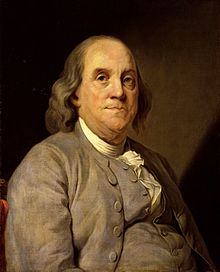 |
| Portrait of Benjamin Franklin by Joseph Duplessis |
Today is the birthday of Benjamin Franklin: writer, publisher, scientist, statesman, revolutionary, philosopher -- and chess fanatic! As the Chicago Chess Center nears the end of our 30-day fundraising campaign, still well short of our $30,000 goal, it's an apt moment to reflect on Franklin's words about what we can learn from chess.
We know today that children in particular gain great benefit from chess, not only through the practice of logical thinking but also through the use of what are sometimes referred to as "soft skills" or "executive functions": the ability to sustain attention on a task, master their feelings and impulses, treat others with respect, manage conflicts, and connect study and practice with success. Franklin, from his own experience, made similar observations in his 1750 essay, noting that the study of chess teaches foresight, circumspection, caution and hopefulness. Everyone, not just young people, can enjoy more success in life by developing these traits.
In the pursuit of our mission to bring these benefits to the residents of our hometown, Chicago, we're staying mindful of Franklin's words ourselves. We're persevering in our search for the resources we need to open our doors and begin offering classes and events to the public this year. We're not losing heart or giving up. The mountain is high -- and we know that, with your help, we can reach the top.
Please donate now to help us open our doors by our target date of May 1.
In the course of his remarkable life, Franklin took part in the creation of a dazzling number of civic institutions, including the Union Fire Company, the Academy and College of Philadelphia (which later became the University of Pennsylvania), the American Philosophical Society, Pennsylvania Hospital, the Pennsylvania Militia and the U.S. Post Office. By donating now, you can do your part to establish a new civic institution here in Chicago -- the first urban, metropolitan chess club since the closure of the original Chicago Chess Center 22 years ago -- and restore Chicago to its place among great American chess cities.
Please join us in celebrating the life of this great chess player, and donate today.
Tuesday, January 15, 2013
Instant classic
Wow. Today, in round four of the Corus Steel supergrandmaster event in Wijk aan Zee, Vishy Anand just played an amazing game. He beat Levon Aronian with Black in only 23 moves with one of the most bizarre sacrificial attacks I've ever seen.
Here's Anand's post-game commentary (thanks to Jeremy Kane for reminding me that the interviewer is an ex-Chicagoan, IM Jan van de Mortel!), in which Vishy notes that the attacking idea was cribbed from Rubinstein's immortal win against Rotlevi:
Daniel King offers his praise:
Monday, January 14, 2013
Number 1 bestseller
Just got an email from Rishi Sethi, who writes that the iPad version of Chess! Lessons from a Grandmaster is the top paid e-book in the Apple Store. So if you have an iPad and you're a beginner (or you teach beginners), do yourself a favor and spend $9.99.
I recently used the print version to prep a class at Faraday Elementary. The tactical exercises are particularly well-chosen: not too routine, but not that hard! Traditionalists can find a paper copy here.

I recently used the print version to prep a class at Faraday Elementary. The tactical exercises are particularly well-chosen: not too routine, but not that hard! Traditionalists can find a paper copy here.

Friday, January 11, 2013
Will Tseng wins 2008 Electronic Knights, 2010 Palciauskas
I most recently saw Will working the floor as a volunteer TD during the Youth Chess Foundation of Chicago's event at Rickover Naval Academy. I knew he was a strong player, but I had no idea how strong! Will recently won the USCF's 2008 Electronic Knights championship, and Alex Dunne wrote a nice feature on him in January's Chess Life. Check it out! (I hope to get permission to republish the article next month for non-subscribers.)
In modern correspondence play, email has replaced post cards. In USCF events, the players are not allowed to consult chess engines (Fritz, Houdini, Rybka...), although they are allowed to perform research in chess books and computer databases. (In international correspondence play, engines are allowed.) Jerry Neugarten asked about the date: why 2008?. Well, the event has a preliminary, semi-finals, and finals, and each game takes quite a while to complete. Correspondence play is a great deal of fun, and you rapidly discover how little you and your opponent really understand about this game.
Will also recently tied for first in the 2010 Victor Palciauskas championship (in honor of the retired Lithuanian-American correspondence World Champion, who earned his Ph.D. in physics at the University of Illinois). Will played a beautiful attacking game again James Vaughn that is also featured by Alex Dunne this month at Chess Life Online. (The gentleman in the suit looking vaguely like Col. Sanders is Alex Dunne: I remember playing in a tournament with him circa 1975 when he looked more like one of Hell's Angels.)
Congratulations to Will for earning two big championship titles!
In modern correspondence play, email has replaced post cards. In USCF events, the players are not allowed to consult chess engines (Fritz, Houdini, Rybka...), although they are allowed to perform research in chess books and computer databases. (In international correspondence play, engines are allowed.) Jerry Neugarten asked about the date: why 2008?. Well, the event has a preliminary, semi-finals, and finals, and each game takes quite a while to complete. Correspondence play is a great deal of fun, and you rapidly discover how little you and your opponent really understand about this game.
Will also recently tied for first in the 2010 Victor Palciauskas championship (in honor of the retired Lithuanian-American correspondence World Champion, who earned his Ph.D. in physics at the University of Illinois). Will played a beautiful attacking game again James Vaughn that is also featured by Alex Dunne this month at Chess Life Online. (The gentleman in the suit looking vaguely like Col. Sanders is Alex Dunne: I remember playing in a tournament with him circa 1975 when he looked more like one of Hell's Angels.)
Congratulations to Will for earning two big championship titles!
Penny Xu featured in News-Gazette

Penny, a sophomore at Urbana High School, was profiled in yesterday's News-Gazette. She's brilliant, charming, and...she lives Downstate. (Again, nobody's perfect.)
But Penny has impeccable Chicago credentials: while she's had many great teachers over the years, I only recently discovered that she was started on her championship path by the legendary Hector Hernandez at the Rudy Lozano Public Library in Pilsen. And Serge Minin, mentioned en passant, starred for the powerhouse Niles North teams of a couple decades ago.
Thursday, January 10, 2013
Thrownness
Somebody (maybe it was Ann Landers) observed that we don't get to choose the circumstances into which we're born. Instead, we're thrown into the world, and we have to learn to cope with our situation.
I attended grammar school in Sanford, N.C. In the summer between second and third grade, I somehow became interested in chess. My mother took me to the public library, where I read all the beginners' books. I even played in the 1967 U.S. Junior Open in Raleigh and the 1968 state championship in Wilmington. But by today's standards, I was a terrible player. Sanford's chess club met on Tuesdays, and I was allowed to attend a couple of evenings, but no adult had any interest in playing or teaching a child. So I stopped going.
When I was 10 years old, my parents separated. We moved in with my grandparents in Shamokin, Pa., an Appalachian anthracite mining town in decline. My mother worked as a third-shift nurse's aide in the county home for the elderly; when my grandparents could no longer take the stress of living with four children, we moved into a public housing project. As a teen, I developed serious health problems: first Wolff-Parkinson-White syndrome, then grand mal epilepsy. I expected to attend college, but our poverty and my chronic illness made me wonder how realistic I was being.
But Shamokin had a chess club that welcomed children, and it was only there that I became a decent player. I learned from Rev. Bingaman, a top amateur player who was kind enough to allow me to win on occasion; Mr. Tasker, a retired businessman; Mr. Myers, a local insurance agent; Mr. Dombrowski, a merchant marine from Brooklyn who had excellent technique in rook endings; Mr. Reed, our high school coach, who had a wide circle of tournament-playing friends; Dan Polastre, first board for our school's arch-rival, Our Lady of Lourdes; and many others. Our club played matches against Bloomsburg and Hazleton, and the adults frequently took me to tournaments in Harrisburg, Allentown, Philadelphia and Pittsburgh.
The skills I learned from chess helped me succeed in my various interests: first science (I was accepted at MIT), then business (I'm a partner in a Loop accounting firm) and the humanities (I have a Ph.D. in American literature and taught for several years at Loyola Chicago).
Enough about me. There are 2.7 million people in Chicago; more than 620,000 of them are children. Thirty percent of these children live in poverty. Of these, at least 90,000 live in "deep poverty," with family income at only 50 percent of poverty level. Add substandard schools, the drug economy and gang violence: suddenly, my childhood seems idyllic in comparison.
There may be hundreds of paths for Chicago's children to escape the situation into which they've been thrown. Chess is one such path, and it works. A chess center in Chicago will provide a safe, chaperoned place for children (and adults) to learn how to think analytically, to form hypotheses, test them, reject them, reformulate.
Of course, children who learn to cope with problems on the chessboard won't find that the streets of Chicago have become magically unproblematic. But chess teaches many of the skills these young people need to succeed in our postindustrial information economy. I expect young leaders like Pobo Efekoro (featured in the amazing chess documentary Brooklyn Castle), not only to cope with reality but to transform it in coming years.

Many people are already doing the good work of chess instruction in school and in after-school programs. If the Chicago Chess Center can contribute to the good work already being done to help young people, even if only for a handful of the hundreds of thousands who need our help, I'd consider that a partial repayment of the debt I owe to the adults who helped me. As long as we keep our doors open, I promise you that we will never turn away a child with a passion to learn.
So far, with just over a week left in our fundraising campaign, we've raised less than 20 percent of the $30,000 we need to open our doors in May. The Chicago Chess Center is a 501(c)(3) organization; your tax-deductible support can change lives. Please give generously now.
Thanks for your time,
Bill Brock
Secretary/Treasurer, Chicago Chess Center NFP Inc.
P.S. You'll also have yet another venue for tournament play and skittles—a more mundane but equally valid reason to give now.
I attended grammar school in Sanford, N.C. In the summer between second and third grade, I somehow became interested in chess. My mother took me to the public library, where I read all the beginners' books. I even played in the 1967 U.S. Junior Open in Raleigh and the 1968 state championship in Wilmington. But by today's standards, I was a terrible player. Sanford's chess club met on Tuesdays, and I was allowed to attend a couple of evenings, but no adult had any interest in playing or teaching a child. So I stopped going.
When I was 10 years old, my parents separated. We moved in with my grandparents in Shamokin, Pa., an Appalachian anthracite mining town in decline. My mother worked as a third-shift nurse's aide in the county home for the elderly; when my grandparents could no longer take the stress of living with four children, we moved into a public housing project. As a teen, I developed serious health problems: first Wolff-Parkinson-White syndrome, then grand mal epilepsy. I expected to attend college, but our poverty and my chronic illness made me wonder how realistic I was being.
But Shamokin had a chess club that welcomed children, and it was only there that I became a decent player. I learned from Rev. Bingaman, a top amateur player who was kind enough to allow me to win on occasion; Mr. Tasker, a retired businessman; Mr. Myers, a local insurance agent; Mr. Dombrowski, a merchant marine from Brooklyn who had excellent technique in rook endings; Mr. Reed, our high school coach, who had a wide circle of tournament-playing friends; Dan Polastre, first board for our school's arch-rival, Our Lady of Lourdes; and many others. Our club played matches against Bloomsburg and Hazleton, and the adults frequently took me to tournaments in Harrisburg, Allentown, Philadelphia and Pittsburgh.
The skills I learned from chess helped me succeed in my various interests: first science (I was accepted at MIT), then business (I'm a partner in a Loop accounting firm) and the humanities (I have a Ph.D. in American literature and taught for several years at Loyola Chicago).
Enough about me. There are 2.7 million people in Chicago; more than 620,000 of them are children. Thirty percent of these children live in poverty. Of these, at least 90,000 live in "deep poverty," with family income at only 50 percent of poverty level. Add substandard schools, the drug economy and gang violence: suddenly, my childhood seems idyllic in comparison.
There may be hundreds of paths for Chicago's children to escape the situation into which they've been thrown. Chess is one such path, and it works. A chess center in Chicago will provide a safe, chaperoned place for children (and adults) to learn how to think analytically, to form hypotheses, test them, reject them, reformulate.
Of course, children who learn to cope with problems on the chessboard won't find that the streets of Chicago have become magically unproblematic. But chess teaches many of the skills these young people need to succeed in our postindustrial information economy. I expect young leaders like Pobo Efekoro (featured in the amazing chess documentary Brooklyn Castle), not only to cope with reality but to transform it in coming years.
Many people are already doing the good work of chess instruction in school and in after-school programs. If the Chicago Chess Center can contribute to the good work already being done to help young people, even if only for a handful of the hundreds of thousands who need our help, I'd consider that a partial repayment of the debt I owe to the adults who helped me. As long as we keep our doors open, I promise you that we will never turn away a child with a passion to learn.
So far, with just over a week left in our fundraising campaign, we've raised less than 20 percent of the $30,000 we need to open our doors in May. The Chicago Chess Center is a 501(c)(3) organization; your tax-deductible support can change lives. Please give generously now.
Thanks for your time,
Bill Brock
Secretary/Treasurer, Chicago Chess Center NFP Inc.
P.S. You'll also have yet another venue for tournament play and skittles—a more mundane but equally valid reason to give now.
Subscribe to:
Posts (Atom)