The persuasively charming duo of Fred Furtner and Rob Eaman talked me into returning to the Chicago Industrial Chess League. If you'd like to play in the CICL, check out the FAQs.
This was the inaugural match for Trading Technologies: first board Josh Hunter won two pawns against me in the opening, and I was more than a bit nervous.
Friday, September 24, 2010


Thursday, September 23, 2010
Jon Burgess simul at the Evanston Chess Club!
If you've never seen a simultaneous exhibition before, or you've never visited the Evanston Chess Club before, next Tuesday is your chance!
Levy Senior Center, 300 Dodge Ave, Evanston, IL 60202
Evanston Chess Presents:
Tuesday, Sep 28, 2010, 6:50 pm - 9:00 pm
Simul vs. NM Jon Burgess
Only a few seats remain for our Simul next Tuesday, 9/28. Register by email now to hold your place.
Bring your best game and challenge NM Jon Burgess in a simultaneous exhibition. Entry fee is FREE. NM Burgess will play up to 10 players. Boards are first-come-first-served. To reserve your board, send an email to enter@evanstonchess.org, including your name, rating and phone number. Like our Tuesday evening club meetings, this event is limited to players high school age and older. We will have open club play for those who don't play in the simul.
Pre-registrants: Please arrive by 6:50 p.m. At 6:55 p.m., we will fill any remaining seats with wait-listed or walk-in players who would like to participate. The simul will begin promptly at 7:00 p.m., and we need to finish by 9:00 p.m.
For those who have never played a simul: The master plays white on all boards, all challengers play black. The master will make his move at your board, then go to the next board. You will wait to make your move as black until the master returns to your board and is watching. Challengers are allowed up to three "passes" when the master comes to their board. Score sheets will be provided and we hope to publish as many of the games as we can.
Thanks to Jon Burgess for doing the simul!
Send name, USCF number, and telephone number to enter@evanstonchess.org
Wednesday, September 22, 2010
another wonderful Bent Larsen game
Not quite correct, but quite entertaining! I don't know any games of Jelen other than this one: the loser can be very proud, too!
In case you were wondering, the box below the ChessFlash diagram is white when it's White to move (as is the case here after 35...Kh3), and black when it's Black to move.... Jelen makes an amazing move, and Larsen makes an amazing reply.
In case you were wondering, the box below the ChessFlash diagram is white when it's White to move (as is the case here after 35...Kh3), and black when it's Black to move.... Jelen makes an amazing move, and Larsen makes an amazing reply.
Women: USA 3, Estonia 1
Wins by Krush and Zatonskih on Boards 1 and 2
At 7-1, the US is among the leaders, though not much is expected of this team because of the firepower of Russia, China, and Ukraine. We'll see!
Results and games here.
At 7-1, the US is among the leaders, though not much is expected of this team because of the firepower of Russia, China, and Ukraine. We'll see!
Results and games here.
USA 3.5, Mongolia 0.5
After two rounds, the USA is solidly among the leaders with 7½ points. I believe that Ukraine, Poland, and dark horse Georgia all have a perfect 8-0.
Games are here! If you click on the floppy-disk icon in the upper-right hand corner, you can download PGN from Rounds 1 and 2.
Games are here! If you click on the floppy-disk icon in the upper-right hand corner, you can download PGN from Rounds 1 and 2.
A tough pairing
In the Cuba-Turkmenistan match, Mesgen Amanov lost to one of the top players in the Western Hemisphere, Cuba's Leinier Dominguez Perez.
I won't have time to try to digest this interesting-looking game (Sicilian Najdorf, English Attack), but you might take a look for yourself.
I won't have time to try to digest this interesting-looking game (Sicilian Najdorf, English Attack), but you might take a look for yourself.
Board 4: A smooth win by Eric Rosen
White gets the two bishops, but the pawn structure after 22...f5!? 23.Kh1? d4! was made for knights. How could White have made the position more bishop-friendly?
There's a lot of tacking between moves 22 and 36: note that Black has already doubled on the g-file by move 29, but waits until move 36 to break. It's all about control: Eric doesn't create the crisis until all the positional details are in his favor.
There's a lot of tacking between moves 22 and 36: note that Black has already doubled on the g-file by move 29, but waits until move 36 to break. It's all about control: Eric doesn't create the crisis until all the positional details are in his favor.
Tuesday, September 21, 2010
Chicago Blaze Board 3: comic relief
IM Angelo Young played very creatively in this game and got a pleasant pull in the endgame. But Rensch found some good defensive moves, and Angelo is forced to milk a suddenly unpromising position. Around the time the Blaze clinches the match, Young overextends and is forced on the defensive. A rook and knight ending in time pressure is no picnic!


Young-Rensch, US Chess League, September 20, 2010
White to play and draw
White has a virtually forced draw in this position: can you find it?
What move did the International Master and five-time Illinois Champion make in time pressure?
It's easy to make a silly mistake when you're trying to win a drawn position for the team's sake. (So go easy on yourself the next time you blunder!)
Over in Siberia: Board 3 for the Faroe Islands is kinda strong!
Yury Shulman won this game very smoothly, as the US got off to a 4-0 start. Chicago's other home team, Turkmenistan, rolled 4-0, with Mesgen Amanov sitting out round 1.
But the Faroe Islands (population less than 50,000, or less than 1/140th the population of metropolitan Chicago) fields a very respectable team!
But the Faroe Islands (population less than 50,000, or less than 1/140th the population of metropolitan Chicago) fields a very respectable team!
Board 2: A very strange draw
I honestly don't understand this game! I think Black was more or less OK after 10...Qa5, but that Felecan probably overestimated White's "primitive" mating attack: 14...fxg6 seems playable. It's not clear that White is winning the final position, but in the final position, White seems to have the choice between a pleasant middle game and a a pleasant endgame.
Florin Felecan saves a very iffy position: good news for the home team!
Florin Felecan saves a very iffy position: good news for the home team!
Gurevich annotates his Blaze win
GM Dmitry Gurevich annotates last night's win on the Blaze blog!


Gurevich-Barcenilla, USCL 2010 (analysis)
variation after 29...Qe8!? 30.Rh6 R8g4
White to play
I-only-know-what-my-engine-tells-me dept.: Dmitry analyzes a beautiful Queen sac combination after 31.h3!! Rg6 32.Rxh7! Kxh7 33.Qh5+ Kg8; however, Black can also sac the Queen with 33...Rh6! Perhaps both variations lead to a draw; perhaps Black retains some winning chances in the 33...Rh6 variation.
Fun with Morphy Numbers
Ever hear of Bacon numbers? They are derived from the concept of Six Degrees of Separation. If you are the actor Kevin Bacon himself, you have a Bacon number of 0. If you played in a movie with him, you have a Bacon number of 1. If you played in a movie with someone who played in a movie with Bacon, you have a Bacon number of 2, and so on.
Bacon numbers were inspired by Erdős numbers, which Caspar Goffman introduced in 1969, 25 years before Bacon numbers. The brilliant, eccentric and prolific mathematician Paul Erdős authored or co-authored about 1400 published mathematical papers, more than anyone else in history. If you co-authored a paper with him, you have an Erdős number of one; if you co-authored a paper with someone who co-authored a paper with Erdős, you have an Erdős number of two, etc. Danica McKellar, who played Winnie Cooper on the TV series The Wonder Years (1988-93), has an Erdős number of 4 and a Bacon number of 2. For more on Erdős, I recommend the fascinating book The Man Who Loved Only Numbers: The Story of Paul Erdős and the Search for Mathematical Truth by Paul Hoffman, who later wrote King's Gambit: A Son, a Father, and the World's Most Dangerous Game.
Tim Krabbé was apparently the first to adapt the concept to chess, introducing Morphy numbers. Taylor Kingston then took up the cudgels in an article on chesscafe.com. Someone who played Morphy (in any sort of game, including an offhand game or simultaneous exhibition) has a Morphy number of 1 (MN1). Someone who played someone who played Morphy has a Morphy number of 2 (MN2), etc. For example, Emanuel Lasker played many games against Henry Bird, who played 12 games with Morphy in 1858 and 1859. Bird thus was an MN1, and Lasker an MN2. Anyone who played Lasker is an MN3.
As you might imagine, everyone who played Morphy died long ago. The lowest Morphy number held by anyone alive today is 3. Until very recently, it was thought that there were only a handful of living MN3s. Kingston in his article pointed out two: GMs Andor Lilienthal and Arturo Pomar. Lilienthal played R.P. Michell at Hastings 1934-35; Michell played the Rev. John Owen at Hastings 1895 (Amateur Section); and Owen played Morphy a number of games in 1858. Pomar played a match against Jacques Mieses in 1946; Mieses played Louis Paulsen at Nuremberg 1888 and Henry Bird at Hastings 1895; and both Paulsen and Bird played a number of games against Morphy. Leonard Barden, in his comments to another article about Morphy numbers, by Tim Harding, added three more living MN3s, all of whom played Mieses in the Premier Reserves section at Hastings 1948-49 or 1949-50: Dennis Horne, Peter Swinnerton-Dyer, and Barden himself.
Sadly, the great Lilienthal died earlier this year at age 99. That left only four living MN3s from the Kingston-Barden list. But wait, there's more! On April 28, 1938, 8-year-old Melvin Chernev (Irving's son), played a game against Emanuel Lasker (MN2) when the great man visited the Chernevs' home. Melvin Chernev lives near San Francisco; I spoke with him on the phone in June of this year. He is the fifth known living player with a Morphy number of 3.
Chicago's own Erik Karklins, age 95, recalls losing to Lasker in a simul in Riga, Latvia circa 1928. Karklins is thus the sixth known living player with a Morphy number of 3.
T.H. George of Essex, England may have been the last surviving player with a Morphy number of 2. The British Chess Magazine wrote in his 1971 obituary, "Essex chess players suffered a severe loss with the death of T.H. George on April 19th at the age of 85. He was the doyen of Essex chessplayers . . . . He was rather proud of having played a man who had played Morphy. This happened in his young days when he beat Jas. Mortimer in a club match; Mortimer had played friendly games with Morphy in Paris in the early sixties of the last century." British Chess Magazine, July 1971, p. 249. The claim that Mortimer played Morphy is corroborated by Chess Monthly, which had an article about Mortimer (1833-1911) in 1892. "In 1853, he was appointed attaché of the United States Legation in Paris, where he had an opportunity of renewing his acquaintance with Paul Morphy. The two countrymen thus became intimate friends. Both being passionately fond of chess, many hundreds of games were played by the master and pupil . . . ." Chess Monthly, Sept. 1892, p. 66.
Leonard Barden, in an e-mail to me yesterday morning, made a fascinating point:
Other opponents of Tartakower's who are still living include Fridrik Olafsson, Lothar Schmid, and possibly Gudbjartur Gudmundsson. In addition, Mortimer played Marshall at Monte Carlo 1902, and Marshall played Louis Levy in the 1941 Marshall Chess Club Championship. As far as I can tell from the USCF and FIDE websites, Levy is alive and living in California.
One wonders whether anyone alive today played Frederick Karl Esling (1860-1955). Esling, who became the first Australian champion in 1886, won an offhand game against Adolf Anderssen in 1878. Unfortunately, he does not seem to have played much in his later years; the last game of his that I have seen was from 1922. Since Anderssen of course played a match against Morphy, anyone who played Esling would have a Morphy number of 3 (and, incredibly, an Anderssen number of 2, even though Anderssen predeceased Morphy). UPDATE: According to Chess World, Vol. 5, No. 7 (July 1, 1950), page 156, Esling's last serious chess game occurred in 1924, when he played for Victoria in a match against New South Wales.
I played (and managed to draw) a 15-minute online game against Barden earlier this year, giving me a Morphy number of 4. But I also played two simul games against Bisguier around 1978, making me an MN4 through the Bisguier-Tartakower-Mortimer route as well.
In sum, here's an alphabetical list of known living MN3s: Leonard Barden, Pal Benko, Arthur Bisguier, Melvin Chernev,Andrija Fuderer, Svetozar Gligorić, Dennis Horne, Borislav Ivkov, Erik Karklins, Louis Levy, Aleksandar Matanović, Fridrik Olafsson, Jonathan Penrose, Oliver Penrose, Arturo Pomar, Lothar Schmid, and Peter Swinnerton-Dyer. Possibles include Peter Clarke (if he played T.H. George) and Gudbjartur Gudmundsson (if still alive).
ADDENDUM: Barden has pointed out on the English Chess Forum that Mortimer also played Ossip Bernstein at Ostend 1907. Bernstein lost to Frans Kuijpers at the 1961 IBM tournament. That apparently makes Kuijpers, now 69, the youngest living MN3. Bernstein also played Bent Larsen, who died earlier this month, twice at the 1954 Olympiad.
UPDATE: I have stricken through the names of MN3s who have died since this was first posted.
Bacon numbers were inspired by Erdős numbers, which Caspar Goffman introduced in 1969, 25 years before Bacon numbers. The brilliant, eccentric and prolific mathematician Paul Erdős authored or co-authored about 1400 published mathematical papers, more than anyone else in history. If you co-authored a paper with him, you have an Erdős number of one; if you co-authored a paper with someone who co-authored a paper with Erdős, you have an Erdős number of two, etc. Danica McKellar, who played Winnie Cooper on the TV series The Wonder Years (1988-93), has an Erdős number of 4 and a Bacon number of 2. For more on Erdős, I recommend the fascinating book The Man Who Loved Only Numbers: The Story of Paul Erdős and the Search for Mathematical Truth by Paul Hoffman, who later wrote King's Gambit: A Son, a Father, and the World's Most Dangerous Game.
Tim Krabbé was apparently the first to adapt the concept to chess, introducing Morphy numbers. Taylor Kingston then took up the cudgels in an article on chesscafe.com. Someone who played Morphy (in any sort of game, including an offhand game or simultaneous exhibition) has a Morphy number of 1 (MN1). Someone who played someone who played Morphy has a Morphy number of 2 (MN2), etc. For example, Emanuel Lasker played many games against Henry Bird, who played 12 games with Morphy in 1858 and 1859. Bird thus was an MN1, and Lasker an MN2. Anyone who played Lasker is an MN3.
As you might imagine, everyone who played Morphy died long ago. The lowest Morphy number held by anyone alive today is 3. Until very recently, it was thought that there were only a handful of living MN3s. Kingston in his article pointed out two: GMs Andor Lilienthal and Arturo Pomar. Lilienthal played R.P. Michell at Hastings 1934-35; Michell played the Rev. John Owen at Hastings 1895 (Amateur Section); and Owen played Morphy a number of games in 1858. Pomar played a match against Jacques Mieses in 1946; Mieses played Louis Paulsen at Nuremberg 1888 and Henry Bird at Hastings 1895; and both Paulsen and Bird played a number of games against Morphy. Leonard Barden, in his comments to another article about Morphy numbers, by Tim Harding, added three more living MN3s, all of whom played Mieses in the Premier Reserves section at Hastings 1948-49 or 1949-50: Dennis Horne, Peter Swinnerton-Dyer, and Barden himself.
Sadly, the great Lilienthal died earlier this year at age 99. That left only four living MN3s from the Kingston-Barden list. But wait, there's more! On April 28, 1938, 8-year-old Melvin Chernev (Irving's son), played a game against Emanuel Lasker (MN2) when the great man visited the Chernevs' home. Melvin Chernev lives near San Francisco; I spoke with him on the phone in June of this year. He is the fifth known living player with a Morphy number of 3.
Chicago's own Erik Karklins, age 95, recalls losing to Lasker in a simul in Riga, Latvia circa 1928. Karklins is thus the sixth known living player with a Morphy number of 3.
T.H. George of Essex, England may have been the last surviving player with a Morphy number of 2. The British Chess Magazine wrote in his 1971 obituary, "Essex chess players suffered a severe loss with the death of T.H. George on April 19th at the age of 85. He was the doyen of Essex chessplayers . . . . He was rather proud of having played a man who had played Morphy. This happened in his young days when he beat Jas. Mortimer in a club match; Mortimer had played friendly games with Morphy in Paris in the early sixties of the last century." British Chess Magazine, July 1971, p. 249. The claim that Mortimer played Morphy is corroborated by Chess Monthly, which had an article about Mortimer (1833-1911) in 1892. "In 1853, he was appointed attaché of the United States Legation in Paris, where he had an opportunity of renewing his acquaintance with Paul Morphy. The two countrymen thus became intimate friends. Both being passionately fond of chess, many hundreds of games were played by the master and pupil . . . ." Chess Monthly, Sept. 1892, p. 66.
Leonard Barden, in an e-mail to me yesterday morning, made a fascinating point:
Mortimer played Znosko-Borovsky and (most notably) Tartakover at Ostend 1907 which blows up Morphy 3 as a finite one-hand number[.]
Z-B played at London 1948 (two Penrose brothers), Tartakover met Gligoric, Benko, Bisguier, Fuderer (Bled 1950) , Matanovic, Ivkov, J Penrose and others[.] Tom George likely played Peter Clarke who was a young member of Ilford CC in the early 1950s when George was still active.
I reckon now the traceable living Morphy 3s number around 15-20.
Other opponents of Tartakower's who are still living include Fridrik Olafsson, Lothar Schmid, and possibly Gudbjartur Gudmundsson. In addition, Mortimer played Marshall at Monte Carlo 1902, and Marshall played Louis Levy in the 1941 Marshall Chess Club Championship. As far as I can tell from the USCF and FIDE websites, Levy is alive and living in California.
One wonders whether anyone alive today played Frederick Karl Esling (1860-1955). Esling, who became the first Australian champion in 1886, won an offhand game against Adolf Anderssen in 1878. Unfortunately, he does not seem to have played much in his later years; the last game of his that I have seen was from 1922. Since Anderssen of course played a match against Morphy, anyone who played Esling would have a Morphy number of 3 (and, incredibly, an Anderssen number of 2, even though Anderssen predeceased Morphy). UPDATE: According to Chess World, Vol. 5, No. 7 (July 1, 1950), page 156, Esling's last serious chess game occurred in 1924, when he played for Victoria in a match against New South Wales.
I played (and managed to draw) a 15-minute online game against Barden earlier this year, giving me a Morphy number of 4. But I also played two simul games against Bisguier around 1978, making me an MN4 through the Bisguier-Tartakower-Mortimer route as well.
In sum, here's an alphabetical list of known living MN3s: Leonard Barden, Pal Benko, Arthur Bisguier, Melvin Chernev,
ADDENDUM: Barden has pointed out on the English Chess Forum that Mortimer also played Ossip Bernstein at Ostend 1907. Bernstein lost to Frans Kuijpers at the 1961 IBM tournament. That apparently makes Kuijpers, now 69, the youngest living MN3. Bernstein also played Bent Larsen, who died earlier this month, twice at the 1954 Olympiad.
UPDATE: I have stricken through the names of MN3s who have died since this was first posted.
Monday, September 20, 2010
A crush on Board 1

Gurevich-Barcenilla,
Chicago Blaze - Arizona Scorpion
U.S. Chess League September 20, 2010
White to play and win quickly
Dmitry Gurevich is a specialist in the 9.Ne1 variation of the King's Indian. He decides that maintaining a knight on e6 is worth a little trouble, and he's proved right!
Blaze vs. Arizona Scorpions at 8 p.m tonight!
Catching up on last week's news: the Blaze lost their first match, 3-1 to Los Angeles.
Tonight, the 2½-1½ Blaze take on the 4-0 Arizona Scorpions.I am pinch-hitting as TD; therefore, it would be unethical for me to guarantee victory. Betsy Dynako has volunteered to TD, so I am now free to guarantee victory. (If we don't have a offensive line that can block, we'll go to the three-step drop and play West Coast Offense.)

The games begin at 8 p.m. Chicago time.
Follow the action on the Internet Chess Club (subscription required).
Or stop by the North Shore Chess Center at 5500 West Touhy Avenue, Suite A, in Skokie!
Tonight, the 2½-1½ Blaze take on the 4-0 Arizona Scorpions.
The games begin at 8 p.m. Chicago time.
Follow the action on the Internet Chess Club (subscription required).
Or stop by the North Shore Chess Center at 5500 West Touhy Avenue, Suite A, in Skokie!
Olympiad begins tomorrow!
More info here.
Local angles: Grandmaster Yury Shulman of Barrington is once again representing the USA, this time on Board 4.
Grandmaster Mesgen Amanov of Northbrook is once again representing Turkmenistan on Board 1.
Local angles: Grandmaster Yury Shulman of Barrington is once again representing the USA, this time on Board 4.
Grandmaster Mesgen Amanov of Northbrook is once again representing Turkmenistan on Board 1.
Sunday, September 19, 2010
cheap publicity dept.

We already knew that Donald Trump needs attention. I don't know what to say about silliness like this, however. (Here's the proposal on Kirsan's own site.) For those of us who have grown sick of both the manufactured "Ground Zero mosque" controversy and the 2010 FIDE election, I suppose we can save time expressing our contempt.
Back from hiatus shortly...not with links to music videos or fashion shows or contrived contretemps, but with notes about the game of chess.
Deep Blue
(Taps microphone): anyone here?
From the new Arcade Fire album The Suburbs :
:
From the new Arcade Fire album The Suburbs
:Here
Are my place and time
And here in my own skin
I can finally begin
Let the century pass me by
Standing under night sky
Tomorrow means nothing
I was only a child then
Feeling barely alive when
I heard a song from the speaker of a passing car
And prayed to a dying star
The memory's fading
I can almost remember singing la, la la, la la la la
La la, la la, la la la la
We watched the end of the century
Compressed on a tiny screen
A dead star collapsing and we could see
That something was ending
Are you through pretending
We saw its signs in the suburbs
You could never have predicted
That he could see through you
Kasparov, Deep Blue, nineteen-ninety six
Your mind's pulling tricks now
The show is over so take a bow
We're living in the shadows la, la la, la la la la
La la, la la, la la la la
La la, la la, la la la la
La la, la la, la la la la
La la, la la, la la la la
La la, la la, la la la la
Hey
Put the cellphone down for a while
In the night there is something wild
Can you hear it breathing?
And hey
Put the laptop down for a while
In the night there is something wild
I feel it, it's leaving me
La la, la la, la la la la
La la, la la, la la la la
La la, la la, la la la la
La la, la la, la la la la
Thursday, September 16, 2010
Wednesday, September 15, 2010
Is Liv talking about me again in People?
Unfortunately, no.
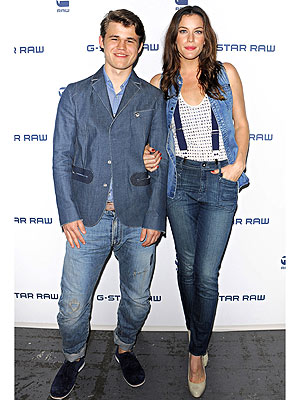
"Liv Tyler Dishes on Her Surprisingly Cool Chess Player Co-Star"
Elsewhere, Jennifer Shahade writes:
Those jeans reminded me of Dvoretsky
. Anyone under 2000 should not be reading his books and I'm guessing anyone over size four would be ill-advised to wear what one woman called a "3-dimensional cut which follows the natural curve of the body."
Fashion makes impossible demands on all of us. I resolve to read Dvoretsky (but on days when I'm over 2000), break 2200, and get back to a 32 waist!
Blaze vs. L.A. Vibe - tonight at 8 p.m.!
Follow the action on the Internet Chess Club (subscription required).
Or stop by the North Shore Chess Center at 5500 West Touhy Avenue, Suite A, in Skokie!
"The Role of Deliberate Practice in the Acquisition of Expert Performance"
What's the best way to improve at chess? This famous study doesn't offer any easy answers, but it does suggest a road to mastery.
A popularization of this study is the basis of one chapter in Malcolm Gladwell's Outliers: The Story of Success (which you really should read even if you don't particularly care for chess!).
A popularization of this study is the basis of one chapter in Malcolm Gladwell's Outliers: The Story of Success
(which you really should read even if you don't particularly care for chess!).
Tuesday, September 14, 2010
It's on craigslist, so it must be legal
No warranty, express or implied. (I don't know who posted this ad.)
But teaching chess to kids is always a fun gig!
But teaching chess to kids is always a fun gig!
Sunday, September 12, 2010
The opening trap that wasn't
Page 271 of Tony Miles' posthumously published biography, It's Only Me (an anagram of "Tony Miles"), mentions an opening trap in the Semi-Slav Defense with which Miles won a piece at move 9, but almost lost the game! The game is given below. It's very wild, and major improvements are doubtless possible for White. One possibility is 14.Bg5, which won quickly after 14...Ne4 15.Qxg8+ Kd7 16.Qxf7+ Kc6 17.Qe8+ 1-0 in Dimitar Marholev (2419)-Miroljub Lazic (2493), Cutro Open 2006. Unfortunately, Black gets to deviate too. Instead of 6...Bb4, as Jelling played against Miles, Black has scored 88% (+10 =1 -1) with 6...Qb6.
Winter article on Larsen
Edward Winter has published a new feature article about Bent Larsen, Bent Larsen (1935-2010), which has a lot of interesting quotes from him.
I once met Larsen. I was attending Columbia Law School in New York, and went to see the end of New York 1984. I saw Larsen, introduced myself, and thanked him for ranking my game against Sprenkle the most theoretically important in Informant 32. (Byrne ranked it second, Razuvaev ranked it tenth, and the other judges were underwhelmed. Overall it ranked 8th-9th, tying with Fedorowicz-Plaskett. See Informant 33, p. 9.) He kindly remarked that some of my moves in that game had been hard to find. A very nice man. How often does an ordinary master get such a compliment from a living legend?
I once met Larsen. I was attending Columbia Law School in New York, and went to see the end of New York 1984. I saw Larsen, introduced myself, and thanked him for ranking my game against Sprenkle the most theoretically important in Informant 32. (Byrne ranked it second, Razuvaev ranked it tenth, and the other judges were underwhelmed. Overall it ranked 8th-9th, tying with Fedorowicz-Plaskett. See Informant 33, p. 9.) He kindly remarked that some of my moves in that game had been hard to find. A very nice man. How often does an ordinary master get such a compliment from a living legend?
Blaze game of the week
NM Jeremy Kane takes a closer look at Dmitry Gurevich's blowout win on the Blaze blog.
Angelo Young's notes
...to his game with Steven Zierk of the San Francisco Mechanics (see previous post) are on the Blaze blog!
Board 3: an optical advantage?
Back to last week's Blaze win against the San Francisco Mechanics....
The London System has an innocuous reputation, but it's a dangerous weapon in Angelo Young's hands. White has a beautiful-looking (almost winning?) position after 17 moves, but Angelo couldn't find a way to convert.
18.e6!? is an interesting try in the diagrammed position below: the Rh8 gets trapped in some variations. But Black seems to be able to defend here, too. Thoughts?
The London System has an innocuous reputation, but it's a dangerous weapon in Angelo Young's hands. White has a beautiful-looking (almost winning?) position after 17 moves, but Angelo couldn't find a way to convert.
18.e6!? is an interesting try in the diagrammed position below: the Rh8 gets trapped in some variations. But Black seems to be able to defend here, too. Thoughts?
Saturday, September 11, 2010

Friday, September 10, 2010
Bent Larsen, 1935-2010

Sad news: via skak.dk (Google translate).
A few games that stick out in my memory:
Fischer-Larsen, Palma Interzonal 1971.
Flohr-Larsen, Copenhagen 1966.
Karpov-Larsen, Tilburg 1980.
Thursday, September 9, 2010
U.S. Chess League standings
Here's the link.
With two wins and a draw, the Chicago Blaze is half a game behind the Arizona Scorpions.
With two wins and a draw, the Chicago Blaze is half a game behind the Arizona Scorpions.
Board 4: Yea Team!
Was this Gauri Shankar's first game for the Blaze? When I went to bed, I assumed that there was no way in the world he could draw a double rook ending two pawns down.
Fortunately, I was wrong!
Fortunately, I was wrong!
Terror on Board 1
Correction: the Blaze drew won! a winnable match against San Francisco last night 2.5-1.5. On Board 1, Dmitry Gurevich continued his hot streak. Early g4, pawn sac, rook sac, mate!
A silly knight trap
It's always amusing when you can trap your opponent's knight with pawns in the opening. One example is 1.d4 e5? 2.Nf3? e4 3.Ne5? d6 4.Nc4 d5 4.Ne5?? f6. Here's another, similar trap:
I was surprised to see that even though 4...Ne4?? was played thrice in BigBase's 3.5 million games, White only found 5.f3! in one of those games. Perhaps White feared 5...e6, threatening 6...Qh4+, but Black's queen can't mate by herself, and it takes too long to call up the reserves. Simply 6.fxe4 Qh4+ 7.Kd2! wins easily after (a) 7...Qxe4 8.Nf3 Bb4+ 9.Nc3 Nc6 10.Qe2! or (b) 7...g6 8.Nc3 Bh6+ 9.Kc2 Qf2+ 10.Qe2.
I was surprised to see that even though 4...Ne4?? was played thrice in BigBase's 3.5 million games, White only found 5.f3! in one of those games. Perhaps White feared 5...e6, threatening 6...Qh4+, but Black's queen can't mate by herself, and it takes too long to call up the reserves. Simply 6.fxe4 Qh4+ 7.Kd2! wins easily after (a) 7...Qxe4 8.Nf3 Bb4+ 9.Nc3 Nc6 10.Qe2! or (b) 7...g6 8.Nc3 Bh6+ 9.Kc2 Qf2+ 10.Qe2.
Wednesday, September 8, 2010
Blaze vs. San Francisco Mechanics starts at 7:30 tonight!
Follow the action on the Internet Chess Club (subscription required).
Or stop by the North Shore Chess Center at 5500 West Touhy Avenue, Suite A, in Skokie!
Andi Rosen recaps the Illinois Open

Albert Chow (photo Betsy Dynako)
Great story by Andi (including annotations by 2010 champion Dmitry Gurevich and 2009 co-champion Florin Felecan) at Chess Life Online!
Illinois Open, day three vanity post (part two)
Gopal Menon - Bill Brock
[Scotch Game, C45]
Illinois Open, Round 6


....that 12.Qd2!! Bf3 13.Qg5! refutes the attack.
[Scotch Game, C45]
Illinois Open, Round 6
1.e4 e5 2.Nf3 Nc6 3.d4 exd4 4.Nxd4 Nf6 5.Nxc6 bxc6 6.Bd3 d5 7.e5!
Objectively toothless: practically, the perfect choice! I knew that Gopal's preparation in main lines was deep: I was about to find out how deep it was in sidelines. And as Albert Chow observed, why should White fix Black's pawn structure?
7...Ng4
I "knew" this move was considered best, but that's all I knew!
7...Nd7!? Chow strongly advocated this positional alternative. 8.0–0 Nc5! Kicks the bishop and controls e6. 9.Be2 Be7 Black has defended his weak squares: develop now, attack later. This may not be the theoretically best continuation, but it would have been the best practical choice!
8.0–0 Bc5 9.Qe2!
9.Bf4 f6!? (9...g5! was Lasker's choice) 10.exf6? (10.h3 fxe5 11.Bg3 Nf6 12.Bxe5 0–0=) 10...0–0 is a line suggested by Keres.

Menon-Brock
Black to move
How are certain chess positions like singles bars? Intoxicated with dreams of mating quickly, I make a aggressive move against my better judgment.
9...Qh4?!
White's score after Black's "aggressive" move in tournament play is over 80%!
Much better is 9...Qe7! I "knew" this was the right move (Black scores 63% of the points in tournament play!), but I saw the possibility of ...Qg3 in the "attacking" line and got carried away. After 10.Bf4, I didn't know what to do in the post mortem until Michael Auger came up with 10...g5! (which is indeed the book move) 11.Bd2 (11.Bg3 h5 is a big mess) 11...Nxe5 12.Re1 Nxd3 13.Qxd3 Be6. Black has a pawn and two bishops: White has a heathy pawn structure. But it doesn't seem to me that White should be too afraid after 14.Qc3 Kd7 (this much has been played before by humans) and now the laptop suggests 15.Bxg5 Bxf2+ 16.Kxf2 Qxg5 17.Nd2 and it's a game. So even Black's "best" continuation is perfectly playable for White.
10.h3 h5?
The losing move?
10...Qg3 Under the influence of von Scheve - Teichmann, Berlin 1907, I'd planned 11.hxg4 Bxg4 but now I realized...

Variation after 10...Qg3 11.hxg4 Bxg4
White to play and win
....that 12.Qd2!! Bf3 13.Qg5! refutes the attack.
10...Nxf2 11.Rxf2 is forced (strangely, I don't see this move in MegaBase 2010) 11...Qg3 12.Nd2 (or 12.Qf3 Qxf3 13.gxf3 Bxh3) 12...Bxh3 13.Qf3 Bxf2+ 14.Qxf2 Qxf2+ 15.Kxf2 Bg4 nominally, Black is up material, but the minor pieces are very good here because the d5-c6-c7 complex is so weak (c5 and d4 are ideal squares for minor pieces). 16.b4! a5? (16...h5 is much better) 17.bxa5 Rxa5 18.a4 and uh-oh.
11.Nd2 Be6 12.Nf3 Qg3


White to play
Gee, it looks nice! But chess is not checkers: the Ng4 doesn't have to be taken. Bishops cannot hop over knights, and rooks need open files.
13.b4!
13.hxg4? would be terrible defense, but White's position is so good that it probably draws: 13...hxg4 14.Qe3! Bxe3 15.Bxe3! the queen is trapped! 15...Qxf3 16.gxf3 gxf3 17.Bf4.
13...Bb6
13...Bxf2+ 14.Rxf2 Qxf2+ 15.Qxf2 Nxf2 16.Kxf2 and this endgame is not even close to tenable. It's unspeakably miserable for Black, point-count notwithstanding. There are great squares for all White's pieces, while Black's rooks are pathetic.
14.a4 Nh2
14...Nxf2 15.Rxf2 Bxh3 (threatens mate!) 16.Be3 (kills attack!);
14...a5 15.bxa5 Rxa5 (15...Ba7 (Menon) is a better practical try, but there's nothing there) 16.Bd2 (yuck);
14...Nh6 15.Be3 Bxe3 16.Qxe3 and the queen is trapped!
14...Resigns was a viable alternative.
15.Nxh2 Bg4 16.Nxg4
16.hxg4 hxg4 17.Nxg4 Qh4 18.Nh6 is another win: I saw the game refutation, but missed that one.
16...hxg4 17.Qxg4 Qxg4 18.hxg4 and I'm embarrassed to say I made another two or three moves before resigning....
Brilliant preparation and nice execution by Gopal Menon! 1–0

Tuesday, September 7, 2010
Illinois Open, day three vanity post (part one)
I managed to extract a win and a draw from two lost positions in the first two days of play, so I'd made it all the way to Board 3 for the fifth round.
GM Dmitry Gurevich wins Illinois Open
Congratulations to Dmitry, the 2010 Illinois state champion! After downing two experts, Dmitry beat GM Nikola Mitkov and Wisconsin state champion NM Jeremy Kane, drew 2008 U.S. Champion Yury Shulman, and beat IM Angelo Young in the final round.
Alan Lee Davenport won the Booster section with 5.5 out of 6.
The event was rated last night (fast service!): crosstables are here!
Thanks to Tim Just and Wayne Clark of Chess for Life LLC for organizing another smoothly-run event. Sevan Muradian and the North American Chess Association lent sets, boards, and the absolutely essential 30-second increment clocks. Special thanks to Carl Dolson and the Illinois Chess Association for making the appearance of so many titled players possible!
Alan Lee Davenport won the Booster section with 5.5 out of 6.
The event was rated last night (fast service!): crosstables are here!
Thanks to Tim Just and Wayne Clark of Chess for Life LLC for organizing another smoothly-run event. Sevan Muradian and the North American Chess Association lent sets, boards, and the absolutely essential 30-second increment clocks. Special thanks to Carl Dolson and the Illinois Chess Association for making the appearance of so many titled players possible!
Sunday, September 5, 2010
Scholastics and side events
Nathan Holzmuller and Leonard Liu tied for first in the Labor Day Scholastic U1200 with 4 wins and a draw.
Matthew Blanton and Sherya Mangalam shared first in the Labor Day Scholastic U700, also with 4.5 points each.
NM Audrius Macenis and NM Aleksandar Stamnov blanked the field in the Game/25 side event with perfect 4-0 scores.
Matthew Blanton and Sherya Mangalam shared first in the Labor Day Scholastic U700, also with 4.5 points each.
NM Audrius Macenis and NM Aleksandar Stamnov blanked the field in the Game/25 side event with perfect 4-0 scores.
Illinois Open, day one
Two state champions bit the dust in round 2: Michael Auger beat defending co-champ IM Florin Felecan and Aakaash Meduri beat FM Albert Chow. 5-1 won the tournament last year, so who knows....
On a personal note: it was a pleasure to see NM Mariano Acosta back at the board after a period of ill health. It was not a pleasure to be defending an endgame against him! (I drew, but only with a little luck.)
Open and Reserve standings are here.
On a personal note: it was a pleasure to see NM Mariano Acosta back at the board after a period of ill health. It was not a pleasure to be defending an endgame against him! (I drew, but only with a little luck.)
Open and Reserve standings are here.
Friday, September 3, 2010
Last call for pre-registration!
Save money: register for the State Championship before 6 p.m.!
You can even listen to more of Taimanov and Bruk while you register (You can skip the first track if you've already heard the previous post.).
Our own NM Trevor Magness (who's preregistered!) plays Chopin, too. (Start at about 1:50 if you don't have time to hear the whole thing..)
You can even listen to more of Taimanov and Bruk while you register (You can skip the first track if you've already heard the previous post.).
Our own NM Trevor Magness (who's preregistered!) plays Chopin, too. (Start at about 1:50 if you don't have time to hear the whole thing..)
I could not find the final position in Mega Database 2010
...though it seems resignable.
Manic Street Preachers - (Its Not War) Just The End Of Love
Via Mig (back from hiatus?).
Manic Street Preachers - (Its Not War) Just The End Of Love
Via Mig (back from hiatus?).
Thursday, September 2, 2010
Mathematicians and musicians
Harvard mathematics professor Noam Elkies, who's been mentioned on this blog a few times, was featured in Sunday's New York Times column. Dylan Loeb McClain returns to the subject in this blog post.
Prodigies are found in three fields: math, music, and chess. What's the link?
Prodigies are found in three fields: math, music, and chess. What's the link?
Illinois Open pre-entries
The three-day Open Section is topped by GM Yury Shulman (2715); IMs Angelo Young (2418), IM Florin Felecan (2415), FM Albert Chow (2280), and NM Jon Burges (2238) bring the total to five reigning or former Illinois state champions starting so far in the three-day field. Kentucky Champion Davis Whaley (2224) and NM Mariano Acosta (2200) have also pre-registered.
The smaller two-day Open Section has two GMs so far: Nikola Mitkov (2571) and Dmitry Gurevich (2479). NM Audrius Macenis (2201) rounds out the top entrants.
These two sections merge into one section with Round 4 on Sunday evening.
Not up for battling Grandmasters? You can play alongside (but not against) them in the 3-day and 2-day reserve sections. There are also Saturday Scholastic events, and a Saturday Game/25 event.
Details here: preregistration closes tomorrow at 6 p.m. You can register onsite, but why not save time and money with preregistration?
The smaller two-day Open Section has two GMs so far: Nikola Mitkov (2571) and Dmitry Gurevich (2479). NM Audrius Macenis (2201) rounds out the top entrants.
These two sections merge into one section with Round 4 on Sunday evening.
Not up for battling Grandmasters? You can play alongside (but not against) them in the 3-day and 2-day reserve sections. There are also Saturday Scholastic events, and a Saturday Game/25 event.
Details here: preregistration closes tomorrow at 6 p.m. You can register onsite, but why not save time and money with preregistration?
trash talk

Arch enemy?
It would appear that mUSCLe aspires to become the Onion Sports of chess.
Hmm, I have to see Yury this weekend....
Board 4: Everything but the kitchen sink
Cindy Tsai beats down the youngest Finegold's attack, and consolidates to victory. Welcome to the Blaze, Cindy!
Board 3: Mr. Formerly Undefeated
It's never embarrassing to lose to a Grandmaster, but I liked Angelo's chances in this matchup....
Wednesday, September 1, 2010
Board 2: Big upset by Felecan
Unofficial result (I was watching from the office before I had to leave): the Chicago Blaze ties the St. Louis Arch Bishops 2-2.
Blaze - Arch Bishops live now!
Live transmission, as always, on the Internet Chess Club.
A couple games are being simulcast locally here.
A couple games are being simulcast locally here.
Blaze vs. Arch Bishops tonight at 7 p.m. (note corrected time!)
Rumor has it that St. Louis's Yury Shulman will be playing his game from the North Shore Chess Center!
More info here!
More on the universally despised St. Louis team here.
More info here!
More on the universally despised St. Louis team here.
Online preregistration for Illinois Open till Friday 6 p.m.
Register now so you don't forget!
2010 Illinois Open
Time Running Out for Pre-Entries
USPS: $79 postmarked by 8/30/10
On-Line: $79 until 9/3/10, 6 pm
$10 extra to play up into Open Section with rating of 1799 and below.
Register at: http://chessforlife.com/
Two prizes have been added to the prize list:
-- Plus Score certificates worth $20 in merchandise will be awarded.
-- Free three month memberships (or extentions) will be given to all main event registrants who send us an email with their contact details and USCF number.
GM Yuri Shulman, GM Dmitry Gurevich, GM Nikola Mitkov, IM Angelo Young and IM Florin Felecan will all compete for the title of Illinois Open Champion for 2010. A group of dedicated Illinois chess patrons has put together a modest support fund to pay the entry fees and offer a bit extra to these outstanding players. If you would like to join us in supporting the titled players of Illinois contact Carl Dolson or Tom Sprandel.
September 4, 2010 - September 6, 2010
Two Day and Three Day Schedules Available
DoubleTree Hotel: 1909 Spring Road , Oakbrook, Illinois 60523
(630) 472-6020, (630) 472-6000 (code C-CHE)
$11,000 (based on 250 entrants)
Open Section
Reserve Section
Saturday Scholastic U1000 Trophy Tournament (side event)Saturday Evening G/25 (side event)
Entry Fees for main events: $79 pre-entry, $90 at door.
For full details see http://chessforlife.com/
Tuesday, August 31, 2010
The hottest player in the world....
...is doubtless Radosław Wojtaszek, who recently finished months of work as a member of Vishy Anand's team.

Chess in Translation continues its serialization of Wojtaszek's comments on the games of the Anand-Topalov match.
Chess in Translation continues its serialization of Wojtaszek's comments on the games of the Anand-Topalov match.
Why can't a computer be more like a man?
While I was looking up something else yesterday, I stumbled across Bruce Weber's 1997 essay, written in the wake of the second Kasparov-Deep Blue match.
Positional chess, as opposed to tactical chess, involves a situation in which there are no clear objectives on the board, no obvious squares to be commandeered, no threats to be made. It is a kind of jockeying, with the two sides maneuvering for position, from which to begin long-term plans. It is the kind of chess that grandmasters generally say they play better than machines, because the power of individual moves is subtle, deeply resonant, rather than calculable.
[Frederic] Friedel tried to explain it with an anecdote about the development of Fritz. He once asked grandmaster Walter Browne about a particular position in which each side had the same number of pawns and pieces and the same number of controlled squares.
"Any amateur would have said the position was a draw," Friedel said. "I said, 'Walter, who is better here?' And he said, 'White is winning.' I said, 'Why?' and he said white controls more space." When Friedel pointed out that in fact each side controlled exactly the same number of squares, Browne continued, "Oh, these squares here don't count. They aren't important."
How to tell important squares from unimportant squares? Friedel didn't understand.The intuition of grandmasters is not mystical. But it's difficult to put into words, let alone program.
"But two years later," he said, "I was driving with the former world champion, Max Euwe, and I had the position in my pocket, and I asked him, and he said: 'White's winning. White's better. It controls more squares.' I counted them for him. And he said, 'Oh, these squares are not important.' "
Monday, August 30, 2010
Illinois Chess Association: Youth Chess Resources
Wow! I just got an email from Maret Thorpe that the long-awaited ICA Youth Chess Resources site has gone live.
If you're involved in scholastic chess (coach, parent, player, volunteer...), you'll benefit from the many helpful articles (learning chess, chess programs, competition...) on this site.
Youth Committee Chair Jerry Neugarten writes:
If you're involved in scholastic chess (coach, parent, player, volunteer...), you'll benefit from the many helpful articles (learning chess, chess programs, competition...) on this site.
Youth Committee Chair Jerry Neugarten writes:
And thanks to Jerry for making it all happen!ICA’s Youth Committee has just posted on our website a considerable amount of new material on youth chess in Illinois. The new content, put together by a team of more than 20 people from throughout the state, is designed to foster the development of new clubs, provide an overview of youth chess in the state, and provide resources for parents, principals, coaches, and club directors.
You can scan a list of the new material by clicking the “Youth Chess” button on our home page (www.il-chess.org) and then reviewing the list on the left side of our “Welcome and Overview” section. Some of the items have sub-menus, and the longer pieces all have internal Tables of Contents. The contents are also summarized in the text on the Welcome page.
The new material includes detailed guides on starting a youth chess program and on tournament play; a list of recommended curricula, including software and websites; an updated summary of the research on the value of chess; profiles of community-wide programs in Illinois; a summary of the major youth tournaments in the state; and lists of Illinois’ past youth champions. (Top current players are listed in the Warren Program section.) But there’s much more, and we’re at work on a few additional sections we hope to finish within a few weeks, including lists of clubs (with contact information) throughout the state.
All the new content can be downloaded in pdf format.
Special thanks to Kevin Bachler, Chuck Beach, Jay Dembsky, Betsy Dynako, Louis Fogel, Hector Hernandez, Paul Kash, Colley Kitson, Mike Leali, Herb Lichtman, Brad Rosen, Andi Rosen, Garrett Scott, Joe Splinter, Jennifer Stevens, Maret Thorpe, Leo Vilker, Phil Yontez, Mike Zacate and Pattie Zinski.
We hope you find this material helpful
Sunday, August 29, 2010
Chess Fundamentals: king and queen against king
Example 4—We now come to Queen and King against King. As the Queen combines the power of the Rook and the Bishop, it is the easiest mate of all and should always be accomplished in under ten moves. Take the following position:

A good way to begin is to make the first move with the Queen, trying to limit Black's mobility as much as possible. Thus: 1.Qc6 Kd4 2.Kd2 Already Black has only one available square.

2...Ke5 3.Ke3 Kf5 4.Qd6 Kg5
Should Black play 4...Kg4 , then 5.Qg6+.
5.Qe6 Kh4
If 5...Kh5 , then 6.Kf4 and mate next move.
6.Qg6

6…Kh3 7.Kf3
King moves, and Queen mates.
7...Kh2
Or 7...Kh4 8.Qh6 mate.
8.Qg2 mate.
In this ending, as in the case of the Rook, the Black King must be forced to the edge of the board; only the Queen being so much more powerful than the Rook, the process is far easier and shorter. These are the three elementary endings and in all of these the principle is the same. In each case the co-operation of the King is needed. In order to force a mate without the aid of the King, at least two Rooks are needed.

White to move
A good way to begin is to make the first move with the Queen, trying to limit Black's mobility as much as possible. Thus: 1.Qc6 Kd4 2.Kd2 Already Black has only one available square.

Black to play has only one legal move
2...Ke5 3.Ke3 Kf5 4.Qd6 Kg5
Should Black play 4...Kg4 , then 5.Qg6+.
5.Qe6 Kh4
If 5...Kh5 , then 6.Kf4 and mate next move.
6.Qg6

After 6.Qg6: the Black King is confined to four squares
6…Kh3 7.Kf3
King moves, and Queen mates.
7...Kh2
Or 7...Kh4 8.Qh6 mate.
8.Qg2 mate.
In this ending, as in the case of the Rook, the Black King must be forced to the edge of the board; only the Queen being so much more powerful than the Rook, the process is far easier and shorter. These are the three elementary endings and in all of these the principle is the same. In each case the co-operation of the King is needed. In order to force a mate without the aid of the King, at least two Rooks are needed.
Blaze blog updates
Tom Panelas profiles Wednesday's Blaze opponent, the St. Louis Arch Bishops.
Coming soon: new edition of a Silman classic
Former Chicagoan Jeremy Silman will be publishing the FOURTH edition of his classic How to Reassess Your Chess . It's already available for pre-order on Amazon (though Silman warns that the actual publication date may be a couple weeks later than the listed September 21st):
. It's already available for pre-order on Amazon (though Silman warns that the actual publication date may be a couple weeks later than the listed September 21st):Strongly recommended for all adults and ambitious juniors from advanced beginner to 2000 and beyond![The Fourth Edition] turned out to be a monster - 650 (oversize) pages!! It's incredibly rich in instructive content, yet is also extremely entertaining (why can't someone learn and have fun at the same time?). Patience please ...... I think you'll find that it's worth the wait.
Subscribe to:
Posts (Atom)