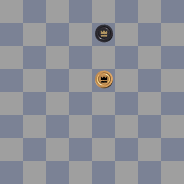
Friday, September 28, 2012

Youth vs. Experience

IM Angelo Young won the Young Masters vs. Experienced Masters, a Scheveningen System event held at the North Shore Chess Center on Sept. 15-16, with an impressive 3 1/2-1/2 score. NM Sam Schamkel was the top scorer among the youngsters, scoring 2-2.

 I'll be posting several games from this match after I work through the backlog of interesting games from the Illinois Open.

In the meantime, crosstable here (broken link fixed).

First game won for the franchise

Chopper Trading lost its first match to Rogue Squadron in the Chicago Industrial Chess League 4½-1½, but Reza Gholidzadeh had the honor of the team's first individual win...against yours truly.


Thursday, September 27, 2012

The Hobbit, or There and Back Again

David Franklin annotates a game from the first round of the CICL season. With the center locked, the White king wanders out of the shire and wanders back with a win in its pocketses.

Steinitz was famous for king walks under fire, but Petrosian lifted the idea of the prophlyactic king walk (evacuating His Majesty from the kingside prior to a kingside break) from Nimzowitsch.
 

Wednesday, September 26, 2012

Finally, the real winner...

...of the Isaac Braswell Fighting Chess Award from the 2012 Illinois Open.

A couple Reinfeldian truisms to consider:  A pawn on the seventh rank is powerful, but a rook on the eighth rank guarding a pawn on the seventh is meh. When all the pawns are on one side of the board, the knight's flexibility generally trumps the bishop's mobility.

Dmitry has been playing 3...a6!? off and on since the 1980s and is probably the world's foremost practitioner: whose idea was this, Gurgenidze's?

Accepting the Greek Gift

The "Greek Gift" bishop sacrifice against the castled king with Bxh7+ (or ...Bxh2+ as Black) is a very powerful attacking idea. As with so many such ideas, it is first known to have been played by Greco almost 400 years ago.

But it doesn't always work! For example, in Charbonneau-Al-Ali, Olympiad 2008, the Canadian GM's sac was erroneous; he had failed to anticipate an unusual defensive idea (...Qa5+! followed by ...Qf5!). Vladimir Vukovic, in his classic The Art of Attack in Chess, devotes a whole chapter to exploring the sacrifice and when it does and doesn't work.

Vukovic noted that after the typical 1.Bxh7+ Kxh7 2.Ng5+, Black can play ...Kg8, ...Kg6, and ...Kh6. "These three variations must be carefully examined on every occasion, for if any one of them contains a loophole, the whole combination falls to the ground." In the following game, my opponent surprised me with 11.Bxh7+, rather than the sane 11.cxd4 of Rozentalis-Arias, Olympiad 2008. The sac would have worked like a charm if I had robotically played 12...Kg8, e.g. 13.Qh5 Re8 14.Qxf7+ Kh8 15.Qh5+ Kg8 16.Qh7+ Kf8 17.Qh8+ Ke7 18.Qxg7#. However, 12...Kg6! left him without an effective follow-up and I won quickly.

Tuesday, September 25, 2012

An old chestnut

Here's another version of a common type of opening trap. Another unusual example is Fernandez-Garbarino, Copa Clarin 2001, which went 1.c4 e6 2.Nc3 d5 3.d3 Nf6 4.Bg5 d4 5.Ne4?? Nxe4! 0-1. Hard to believe that White was rated 2264!

My opponent "improved" over Kostopoulos-Kerimov, 2001, which continued 7...Qa5+ 8.Bd2 Bxd1 9.Bxa5 dxe5 10.Bb5#! In the final position, my opponent resigned in light of 11...Nf6 12.Nxh8 Nxe4 13.Be3, when White will be a knight up even if Black succeeds in trapping the beast on h8.

Monday, September 24, 2012

More from the Illinois Open

Jimi Akintonde is a very talented young player with a predilection for concrete, forcing play. Tam Nguyen may seem mild-mannered, but I've never known him to back down from a fight. And if the opening is the Sãmisch Variation of the King's Indian, the game will be entertaining.

(Not the) Isaac Braswell Fighting Chess Award

10:56 a.m.

I just read my morning email:
Dude - you posted the wrong game as winner - You posted Li-Gurevich instead of Ngyugen-Gurevich which I had stated! --Sevan
I'll have the real winner up sometime this evening. Until then, enjoy this worthy contender. (To add to the confusion, I have yet another game by Tam Nguyen scheduled to post this afternoon: oy.)

 There were a lot of worthy candidates: organizer Sevan Muradian chaired a committee that selected this game Dmitry Gurevich's win against Tam Nguyen.  The winner and loser split the $250 prize for their enterprising play.

The following game isn't the prizewinner, but it is pretty cool.  Enjoy until I fix the mistake.

***

Dmitry Gurevich had already won two tournaments in the past month: a share of the U.S. Open title and clear first in Indianapolis. Facing his 12-year-old student Zhaozhi (George) Li in round 2, Dmitry wasn’t afraid to take risks in order to win a third event. The light notes below have previously appeared in Chess Life Online.

Zhaozhi Li (2117) – GM Dmitry Gurevich (2529)
[A57]
2012 Illinois Open

1.d4 Nf6 2.c4 a6 3.Nf3 c5 4.d5 b5 5.a4 b4 6.Nbd2 g6 7.e4 d6 8.a5 Bg7 9.Bd3 0–0 10.0–0 e6 11.Re1 Ra7 12.Ra2 Re7 13.b3 Rfe8 14.h3 Nbd7 15.Bb2 Nh5 16.Bxg7 Kxg7 17.Qa1+ e5 18.Nf1 Nf4 19.Bc2 Nf6 20.Ne3
 
Black to play 

Gurevich writes, "Here I got too excited after seeing some beautiful checkmating variations."

20...Bxh3?!

After the game, Dmitry suggested 20...Rg8 with the idea of a slow but sure kingside breakthrough.

21.gxh3 Qc8 22.Nh2
Black to play 

22...Qxh3?! 

In retrospect, Dmitry though that 22...Nxh3+, with more than sufficient compensation, would have been more prudent.   But prudence does not win awards for bloodthirstiness....

23.Qd1! 

George avoids Dmitry's fantasy mates.

23.Kh1?? Ng4 and White can only choose which square to be mated on; or 23.f3? N6h5! 24.Qd1


Black to play (variation) 

and now 24...Qg2+! leads to a beautiful smothered mate.

Back to the game:

23...h5 24.Qf3 Qc8 25.Qg3 h4 26.Qf3 Rh8 27.Kh1 Rh5 28.Rg1 Kf8 29.Bd1 Re8 30.Ng2! Kg7 31.Nxf4 exf4 32.Re2 Rhe5 33.Bc2 Nh5 34.Ng4 Rg5 35.Nh2 Rge5 36.Rg4! 

 George is not satisfied with a draw.

36...Qd8 37.Re1 Rh8 38.Qg2 Ng3+ 39.Kg1 Qf6 40.Nf3 Reh5 41.e5 dxe5 42.fxg3 hxg3 43.Be4 R8h6 44.Re2 Qd8 45.Bxg6! fxg6 46.Nxe5? 

46.Rxe5! would have put Black on the ropes.

46...Qf6! 47.Qe4 Rh1+ 48.Qxh1 Rxh1+ 49.Kxh1 f3! 50.Re1 g2+ 0–1 


Sunday, September 23, 2012

The thrill of victory, the agony of defeat

We'll be posting games from the 2012 Illinois Open over the next few days, courtesy of FM Albert Chow.

Senior Master Carl Boor had an interesting summer.  Congratulations to Matthew Stevens: it's not every day that a Class B player knocks off a 2400.


62 players at yesterday's Evanston 3x3

Take a bow, Maret Thorpe!

NM Kevin Bachler and provisionally-rated Aamir Ansari tied for first in the Gold Section with 3-0; Jonathan Tan scored 3-0 in the Silver Section; and Matthew Ylinen, Keith Ammann, and Lorenzo Sampson scored 3-0 in the Bronze Section.

Crosstable here.

Friday, September 21, 2012

Carl Boor is now at foxvalleychess.com

Not all opposite-color bishop endings are drawn

Boris Gelfand just won a textbook ending against Hikaru Nakamura in the first round of the Grand Prix event in London:


On the queenside, Black's bishop and two pawns paralyze White's four pawns with a dark square blockade. On the kingside, Black's two connected passers are mobile, and the Black king, bishop, and pawns coordinate with each other.. (Nakamura was even up a meaningless pawn for several moves.)  So the final position is an easy win, even for you and me.  Opposite-color bishop endings are funny that way: you can be two pawns up and it's a dead draw, or material is equal and somebody's completely winning.

I should add that I followed this game live from the new website of The Week in Chess.

P.S. Alejandro Ramirez annotates this game on ChessBase.

Chess Life Online covered yesterday's opening ceremonies.

Wednesday, September 19, 2012

Anand's Accenture talk: decision-making

If you want to know how a World Champion makes decisions, prepares for play, uses the computer, and balances reason with emotion, then you should carve out 44 minutes to watch this low-key lecture.

Tuesday, September 18, 2012

An "Anti-Sicilian" Trap

1.e4 c5 2.Nf3 d6 3.c3 is an "anti-Sicilian" line that might be called an "Alapin Variation Deferred." White prepares to grab the center with d4, and meets the natural 3...Nf6 with 4.Be2, when 4...Nxe4? 5.Qa4+ is a transparent trap. Best may be 4...Nbd7!?, forcing White to do something about his hanging e-pawn. The natural 4...Nc6, as in the game below, is playable, but allows 5.d4!? Black can then win material with 5...cxd4 6.cxd4 Nxe4!? 7.d5 (the point, meeting 7...Nb8? with 8.Qa4+, winning the knight) Qa5+ 8.Nc3 Nxc3 9.bxc3 Ne5 10.Nxe5 Qxc3+!? (the less greedy 9...dxe5 is possible) 11.Bd2 Qxe5 12.O-O! Qxd5 13.Rb1! and White has very dangerous compensation for his three(!) sacrificed pawns. In Basman-Stean, Hastings 1973/74, among other games, Black came to a grisly end. See Informant 17/439 or Shamkovich's book The Modern Chess Sacrifice for more details. Hodgson managed to survive after 13...f6!? in Gildardo Garcia-Hodgson, World Open 2000, as I also did in an Internet blitz game.

Black's 5...Nxe4??, as my opponent played in the game below, is just another way to blunder a piece, losing to the simple 6.d5. In Acunzo-Semenyuk, European Senior Championship 2011, Black soldiered on with 6...Nb8 7.Qa4+ Bd7 8.Qxe4, even managing to draw after White later hung a rook.

My opponent chose to lose a piece in a different way with 6...Nxf2, but I wrapped up the game in energetic fashion. Note that after 10.Bf6!, 10...gxf6? would have allowed 11.Bb5! double check and mate, à la Nimzowitsch-NN, Pernau 1910, which Bill alluded to the other day (position 14).

King and Pawn vs. King (Chess Homeschool, Day 6)

If we can't play positions with three pieces reasonably well, what hope is there for us with thirty-two pieces on the board?

I'm not providing solutions to any of the positions below yet: get Mom or Grandpa to play the other side and see whether the two of you can figure this out together.

1) White to play draws, Black to play loses
Usually, you want it to be your turn to move. Here, neither player wants to be on move! (Nerd alert: the technical term is reciprocal zugzwang.) When both kings can make it to the pawn's queening square, each player is trying to trick the other into a position like the one above.

*******

2) White wins, no matter whose move it is
3) White to play wins, but watch out for stalemate!
4) White to play draws, Black to play loses

In one-on-one basketball, what does the player with the ball do when the defender is in perfect position?  Maybe a head fake: the attacker wants the defender to move in one direction so she can drive the lane in the other direction.  The pawn's queening square (d8 in Position 4) is like the basket, and the Black king on d7 is a perfectly-placed defender: that's why Black doesn't want to move first! 1...Kc7 2.Ke6 or 1...Ke7 2.Kc6.

To understand Black's drawing technique with White to move, see Vince Hart's blog post, Straight Back Draws.  Compare Position 4 to Position 2: Position 2 is always lost because the Black King has no room to go straight back! Of course, it's important to go straight back at the right time: 1.Kc5 Kd8?? loses because White can get to Position 2, but 1.Kc5 Kc7 2.d5 Kd7 and then....

5) White wins, either player to move
The rook pawn is a special case. Either king can be stalemated on the rook pawn's queening square:

6) Rook pawns are weird: draw with either player to move


7) Rook pawns are very weird: Black to play draws
What happens when the kings are far away from the pawn? It's good to know the square of the pawn rule  (much easier than "I go here, he goes there, I go here.." or counting on your fingers):

8) White to play wins, Black to play draws
9) A tricky square to draw!
Kings have elbows and should learn how to use them:

10) White to play wins (in chess, the shortest distance between two squares is not necessarily a straight line!)
11) Black to play draws (Gligoric-Fischer, Candidates 1959)
12) White to play: what happens?  Black to play: ditto?
If you find the answer to Position 12 intuitive, you're a better player than I am!  (Can White create Position 1 with Black to move?)

There's much more to know: the Wikipedia article on king and pawn vs. king is a good place to continue. (Check out the 1908 study by Jan Drtina in the "Any key square by any route" section.)  If you enjoy these endings, I can't recommend Müller & Lamprecht's Secrets of Pawn Endings strongly enough: it's amazing that these seemingly simple positions are so complicated and so beautiful.

Experienced players will note that I avoided the "O word"!  I like to teach that by starting with a position from checkers:

Black to play loses; White to play draws

Monday, September 17, 2012

Queen vs. Pawn (Chess Homeschool, Day 5)

You already know how to mate with king and rook against king or king and queen against king. King and pawn against king is surprisingly complicated: we'll do that tomorrow. For now, let's look at major battles between king and piece vs. king and pawn.  We'll start with queen vs. pawn.

1) White to play and win
In Diagram 1 above, Black is about to make a queen, and king + queen vs. king + queen is usually a dead draw.  (We'll see some exceptions shortly!)  So White must stop the pawn from queening.

When the pawn on the seventh is a knight pawn or a center pawn, the win is easy.  Use queen checks to approach the pawn in a zigzag fashion. If the king steps away from the pawn, you can attack the pawn along the file, preventing it from queening, and make the king come back. Eventually, you'll force the Black king to step in front of the pawn on b1. Bring your king one step closer. Lather, rinse, repeat! It may take twenty moves or so, but White eventually win the pawn with king and queen and checkmate.

2) White to play: Black draws
The above technique works great with center pawns and knight pawns, but it breaks down with rook pawns. In Diagram 2, the White queen will eventually make it to (say) g4, giving check to the Black king on g2. Black will play ...Kh1! White doesn't have time to bring her king up, as the stalemate must be released. So it's a draw with best play.

3) White to play: Black draws
Diagram 3 is a draw, too. Imagine that White zigzags to (say) g3, giving check to a Black king on g1. Black sacrifices the pawn with ...Kh1! and White can't make progress: the reply Qxf2 is stalemate. Get out the pieces and try this yourself!

4) White to play and win
Diagram 4 (taken from Müller and Lamprecht's Fundamental Chess Endings, position 9.03) is a very cool exception: if the king is close enough, you might be able to find a way to let Black make a queen, then catch Black in a mating net! (Visualize the position: White Kb3, Qd2, Black Kb1, Qa1: even if it's Black's move, is there any way for Black to escape this predicament?)

5) White to play and win
In Diagram 5, White can again allow Black to queen, then deliver mate on the c2 square.


6) Angelo Young - Awonder Liang, Skokie 2012: White to play and win

As a general rule, the queen wins easily against a pawn on the sixth rank. Just last night, I saw IM Angelo Young beat Awonder Liang at the North Shore Chess Center (Diagram 6). Angelo began with 1.Qg2+, then zigzagged closer until he gave check on the b4 square. Awonder resigned, as his only move to protect the a3 pawn was ...Kb2-a2. White then moves the king anywhere, and it's Black turn. Unfortunately, there's no such thing as semi-stalemate: Black's only move is ...Ka2-a1, and White grabs the free pawn with check.  

There is no substitute for trying to work these positions out for yourself: that's the way you'll remember them! Answers later: let us know if you get stuck.

Silman's Complete Endgame Course is a great reference for young players.  It's available as an interactive app for the iPad.

Sunday, September 16, 2012

It's a metaphor

No Harry Potter, no Kronsteen, no Knight playing Death, but 101 checkmates in film.

Of the actors pictured, Bogart was one of the strongest chess players in real life. (Peter Falk, who didn't make the cut, was no patzer, either.)

Parental advisory: at least two instances of profanity and one (bloodless) murder.


Via ChessVibes.

The Greatest Game You've Never Seen

This is an amazing game by IM Nadanian, featuring his patented 5.Na4!? against the Grünfeld. The diagram shows the position before all hell breaks lose. The final position looks like a composition: despite Black's huge material advantage and all those pieces clustered around his king, he has no defense against the primitive threat of 18.Qh8#. Astonishing. This game deserves to be in all the anthologies.

Saturday, September 15, 2012

Answers to Day 2 Problems (Chess Homeschool)

Queens died prematurely in all of these miniatures.

This game was in Guinness for being the shortest game between two masters. 4.h3?? weakens White's defenses along the e1-h4 diagonal, and Black forces White to choose between loss of king or loss of queen:


Black was very brave to accept the Danish Gambit without the customary "return of gift" (3...d5!? or 5...d5!?).  But 6...Bg4? lost a pawn to the standard 7.Bxf7+! trick, and 9...Nf6?? allowed a skewer:


The next one isn't easy: the loser of this game, GM Ratmir Kholmov, once beat Bobby Fischer brilliantly. The in-between move 11...Bxg2! takes a flight square away from White's king so that 12...Bb4+ can only be answered by 13.Qd2. And if White makes a normal move (12.Qd2 or 12.Nc5), Black just takes the free rook.


Black relied on the absolute pin in the game below when he played 11...Rd8?? But after 12.Qxd8+! Kxd8 13.O-O-O+, White unpins with check and wins back the queen with interest.


I apologize for the unfairness of the next problem! (But you did have the big hint that a queen hunt was involved...) The big pitfall to avoid was 12.Bxe7?? Nf3+! winning White's queen. But after 12.Be2!, White really is threatening 13.Bxe7, as well as 13.Bh5 trapping the Black queen, and there's no way for Black to stop both threats.


Accidents happen when the queen doesn't have Luft (chess players use the German word for "air" to mean an escape square or airhole). After 5.Bxf7! Kxf7 loses the queen after 6.Ng5+ Ke8 7.Ne6 or 6...Kf8 7.Ne6+, and 6...Kf6 7.Qf3 is mate. Patzers like you and me might choose to play on after 5...Kf8, but after 6.Ng5, White is up a pawn with a winning attack.


Whenever the queen and king are lined up on the e-file, look for tactics! 9.Qxe5+?? opened the e-file, and Black immediately took advantage with 9...Kd7!, clearing the way for the Ra8 to come to e8. The bishop on c1 was already hanging, and White has no way to answer both threats (10.Qc3 Re8+ and mate in one move).


If you've lost material out of the opening, and you're playing in London in 1940, you should keep calm, carry on, and trap the opponent's queen. Booth played 12.c3!, and Black has no way to escape, nor to stop 13.Nb3. Give yourself full credit if you chose 12.O-O! instead: 12...Qxd4 loses to the discovered attack 13.Bb5+, and 12...Bd7 13.Qb4 is overwhelming for White (or so Houdini tells me).


It is good to threaten mate and the queen at the same time! 12.Nd5! is a killer because 12...Qxd2 is answered by 13.Nc7 checkmate, and 12...Rxd5 13.Qxa5 wins because the poor knight on c6 doesn't really protect a5: it's pinned. The winner of this game, former U.S. Champion GM Arnold Denker, donated the money to fund the annual Denker Tournament of High School Champions.


You've already seen the Bxf7+! followed by Ng5+ & Ne6 queen suffocation idea. The only difference in this game is that Black could have responded to 7.Bxf7! Kxf7 8.Ng5+ with 8...Kg8. While the queen is not lost, checkmate on f7 is Black's fate after 9.Qb3+

Friday, September 14, 2012

Two traps in the King's Gambit

The King's Gambit, that most romantic of openings, has repeatedly been pronounced dead. Over 80 years ago, Siegbert Tarrasch wrote in The Game of Chess (published in German in 1931, English translation in 1938), "I maintain it to be a decisive mistake." Rudolf Spielmann, "The Last Knight of the King's Gambit," was similarly pessimistic, writing an article at about the same time entitled, "From the Deathbed of the King's Gambit." In 1961, the first article in the inaugural issue of the American Chess Quarterly was Bobby Fischer's famous "A Bust to the King's Gambit," in which he opined, "the King's Gambit is busted. It loses by force."

Yet the King's Gambit, like a monster rising from the crypt, refuses to die. Fischer, a couple of years after pronouncing it dead, started playing it himself, scoring 3/3 against Evans (the editor of American Chess Quarterly!), Wade, and Minić! Today another American chess icon, Hikaru Nakamura, keeps playing it, even against world-class GMs. ChessCafe.com just published a three-part survey on the opening by Tim Harding (Part 1, Part 2, Part 3).

For almost as long as the gambit has existed, the Kieseritzky Variation (1.e4 e5 2.f4 exf4 3.Nf3 g5!? 4.h4! g4 5.Ne5) has been a critical line. Greco used it to thrash poor NN in 1620, over two centuries before its eponym, Lionel Kieseritzky, took up the line. Spassky and Fischer played the Kieseritzky in their famous first encounter at Mar del Plata 1960. (Fischer's experience in that game, in which he stood better out of the opening but lost, inspired him to advocate 3...d6 in his article, aiming for an improved version of the line, since White can no longer play Ne5.)

The Kieseritzky features very principled play by both sides. Black fights to hang onto his extra pawn, even at the cost of weakening his king-side with 3...g5; if unmolested, he will consolidate with ...Bg7 and ...h6. White further compromises his own king-side with 4.h4 in order to thwart this plan. In the olden days White often played 4.Bc4 instead, intending to sac a piece after 4...g4 5.0-0, the Muzio Gambit. This is rarely seen nowadays, since Black need not be so greedy. More solid is 4.Bc4 Bg7! 5.0-0 d6 (5...h6 and 5...Nc6 are also good). One example of this is Van de Wynkele-Semina, 1997, which continued 6.g3!? Nc6! 7.gxf4 gxf4 8.d4 Bg4 9.c3 Qf6 10.Qb3 0-0-0! Black won in 29 with an attack against White's gratuitously weakened king-side.

The game below is a short, sharp encounter between two 19th Century giants. I have altered its move order in order to illustrate a second trap. The game actually began 1.e4 e5 2.f4 exf4 3.Nf3 g5 4.h4 g4 5.Ne5 Bg7 (Paulsen's move, still considered strong today) 6.Nxg4?! (6.d4! is better) d5! 7.exd5?? Qe7+! The changed move order (3...d5 4.exd5 g5? (4...Nf6 is correct)) shows an ill-advised attempt to combine 3...g5 with the Modern Defense 3...d5, a strong and solid defense popular today. (See diagram.) This could have been refuted by 5.Qe2+! (mentioned in Volume 1 of Estrin and Glaskov's 1982 book Play the King's Gambit). Then Black drops a pawn or two after 5...Qe7 6.Nxg5; 5...Be7 6.Nxg5; or 5...Ne7 6.Qe5! Rg8 7.Nxg5; and loses his queen after 5...Kd7?? 6.Ne5+ (6...Ke8/e7 7.Nc6+; 6...Kd6 7.Nxf7+). Amazingly, no one seems to have actually played this very strong move. www.365chess.com has seven games with this line, including one by Alekhine a year before his death. None of the players found 5.Qe2+!

The second trap is seen after 7...Qe7+!, an echo of the first. Once again a check on the King 2 (e2 for White, e7 for Black) spells disaster for the opponent, since an interposition will cause the opponent's piece on King Knight 4 (g5 for Black, g4 for White) to hang. Alternatively, a king move will leave the king fatally exposed. Paulsen had pulled off this same trap in a simul a year before. There he had played 9...Bxg4+ 10.Kxg4 Nf6+ 11.Kh3 Qd7+, when White could still have put up some resistance with 12.g4! fxg3+ 13.Kg2! Qxd5+ 14.Qf3 Qxf3+ 15.Kxf3. Although Black still has a won game after 15...Rg8, surviving to a bad ending is more than White deserves. This time around Paulsen improved with the bone-crushing 9...h5! Then 10.Nf2 Bg4+! quickly induced resignation in Gruzman-Arkanov, Russia (ch) 1978. Mackenzie tried 10.Bb5+, when 10...c6, 10...Kf8 (Fritz's preference), and Paulsen's 10...Kd8 all win with ease. Paulsen checkmated Mackenzie in short order.